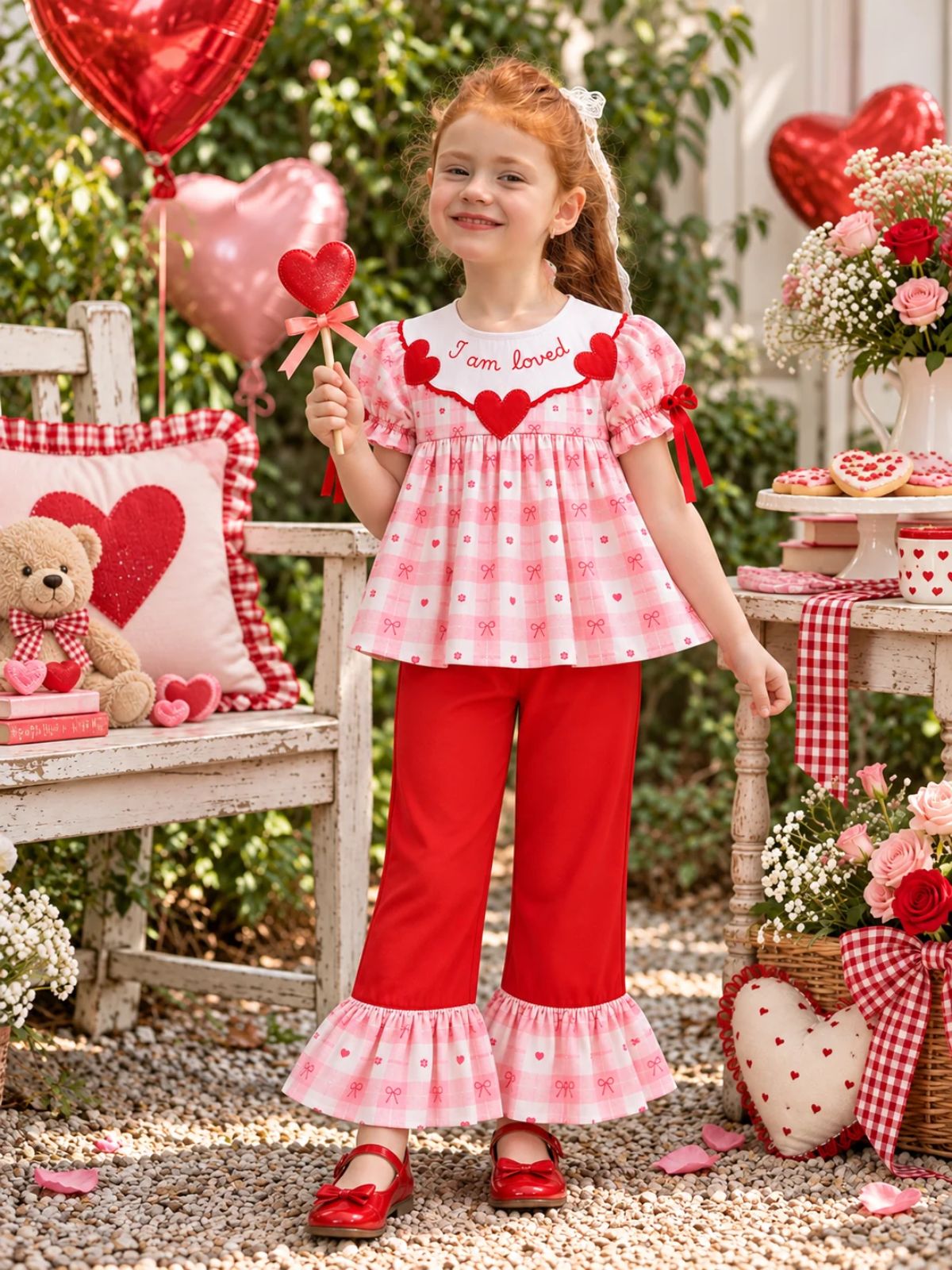
Toddler Valentine Dress for Your Little Love
Quick Answer
A toddler Valentine dress can feature a cotton twirl skirt, soft tulle, sequin hearts, warm knit fabric, or traditional hand smocking. Heart-print cotton dresses are practical for preschool, while bishop dresses offer a classic look for Valentine’s photos. When comparing styles, check the fabric, lining, fit, and decorative details to find an outfit your toddler can wear comfortably.
A toddler Valentine dress is a holiday-themed dress for young children, often decorated with hearts, pink or red fabrics, and playful details. A hand-smocked Valentine dress is a traditional style with embroidery stitches worked across gathered fabric.
A dress that looks lovely in photographs may not be comfortable for a full day at preschool. Tulle, sequins, and large decorations need different construction from a simple cotton dress.
Parents can make better decisions by understanding these differences. For boutique owners, the same details are important when developing children’s clothing that looks appealing and is practical to wear.
Top Toddler Valentine Dress Styles for Different Occasions
Valentine dresses come in several popular styles, from twirl skirts and sparkling hearts to warm winter outfits and delicate hand embroidery. The occasion, weather, and child’s activity level can help narrow down the options.
Twirl and Tulle Valentine Dresses
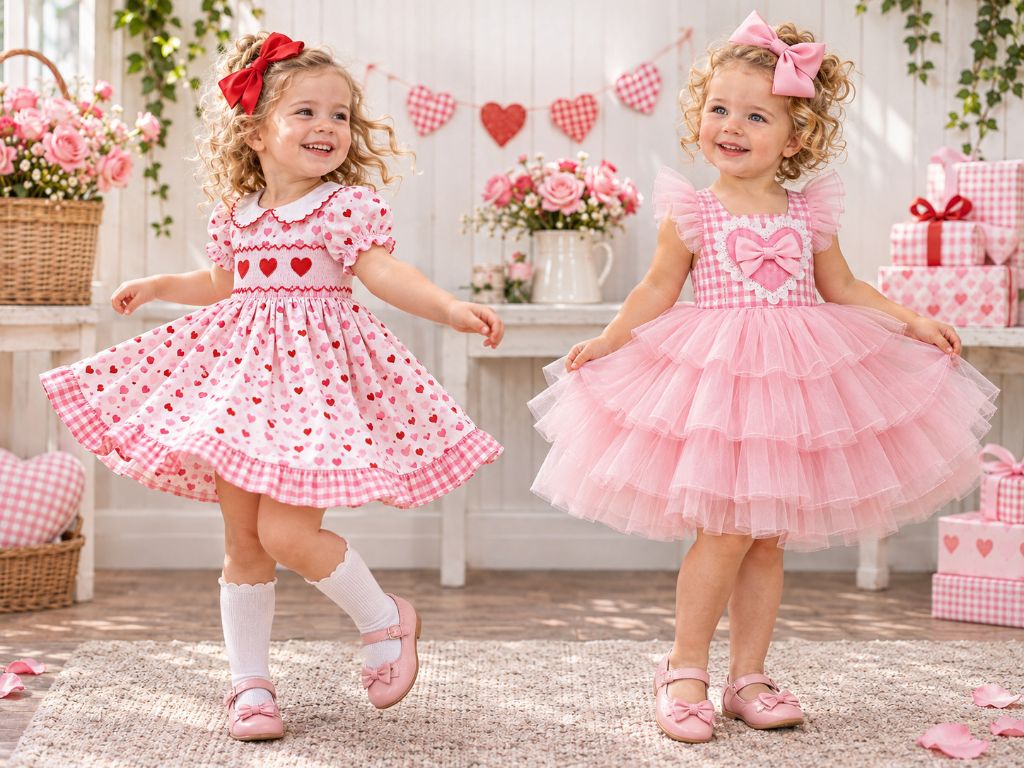
Twirl dresses and tutu dresses both have full skirts, but their construction is different. A cotton twirl dress usually gets its volume from a flared pattern or gathered fabric. A tutu uses layers of tulle to create a fuller shape. For Valentine’s photos, a pale pink tutu can look especially charming. However, several tulle layers may feel bulky when a toddler sits or plays. Soft lining is important because unfinished tulle edges can feel rough against the skin.
For everyday wear: A lightweight cotton twirl dress may be easier to manage. A well-lined tutu is often better suited to a shorter party or photoshoot.
Sequin Hearts and Statement Valentine Dresses
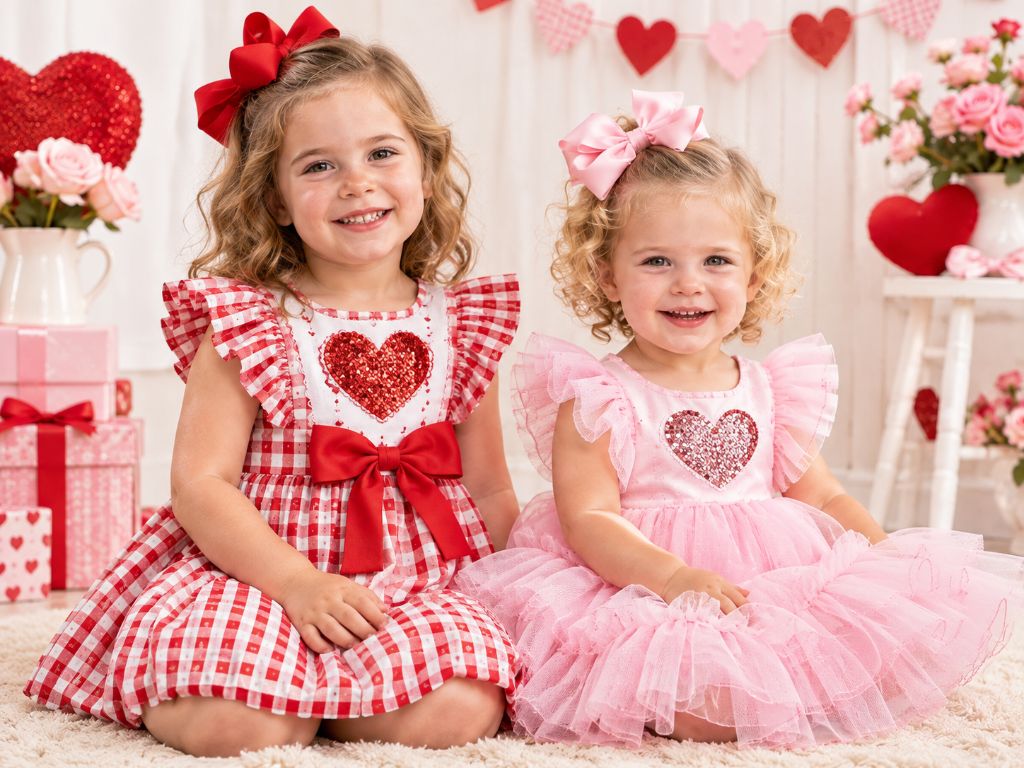
A large red heart, sparkling sequins, or a bold bow can turn a simple dress into a festive outfit. A sequin heart placed across the chest creates a strong visual detail without requiring decoration across the entire garment. The main concern is how the decoration is attached. Large sequin areas can make fabric less flexible, while rough backing may cause discomfort.
Parents should check for loose pieces, especially on clothing for younger toddlers. For boutique buyers, this is also a construction decision. A secure decorative panel and suitable lining matter as much as the appearance of the finished artwork.
Cozy Valentine Dresses for Cold Weather
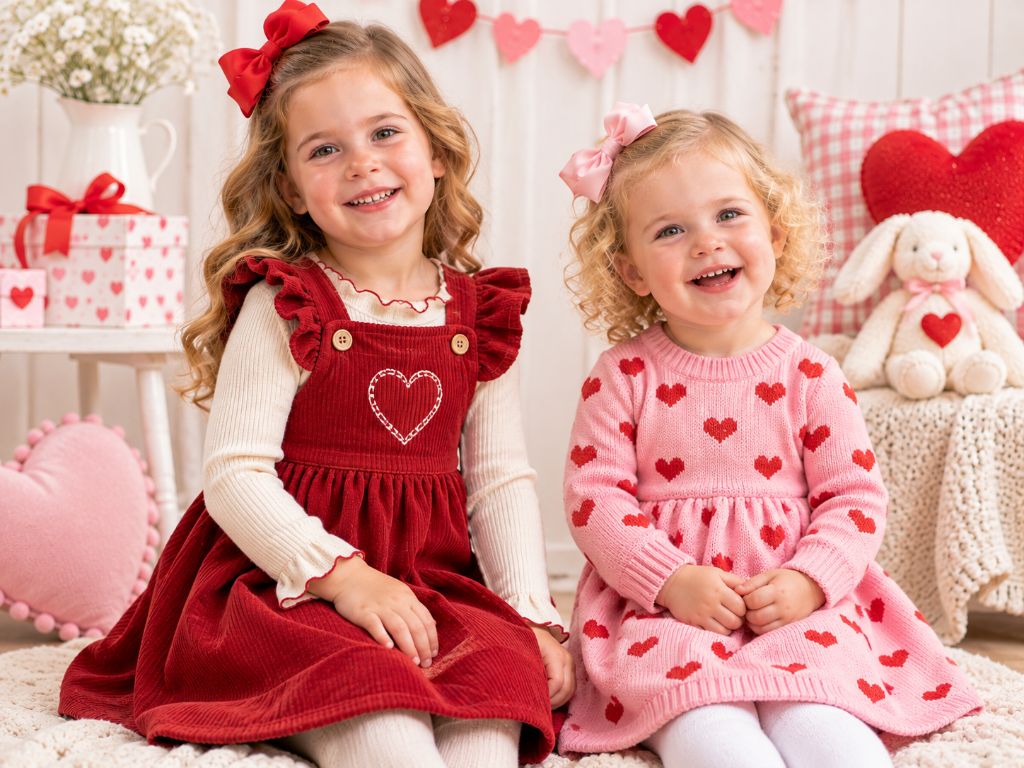
February is still winter in much of the US and UK, making warm Valentine outfits a practical option. Long-sleeve knit dresses, French terry outfits, and corduroy pinafores can feature heart prints, embroidered details, or simple pink and red accents.
Knit fabric stretches through its looped structure. Corduroy is woven and has a raised surface, giving it a different texture and fit. Neither material is automatically warmer in every design. Fabric thickness, weight, and layering also matter. A toddler Valentine dress intended for cold weather should allow enough room for tights or a long-sleeve top underneath.
Heart-Print Cotton Dresses for Preschool
Heart-print cotton dresses offer a festive look without heavy decorations. Small repeated hearts work particularly well on gathered skirts. Larger prints require more careful placement because parts of the design can disappear inside pleats or seams.
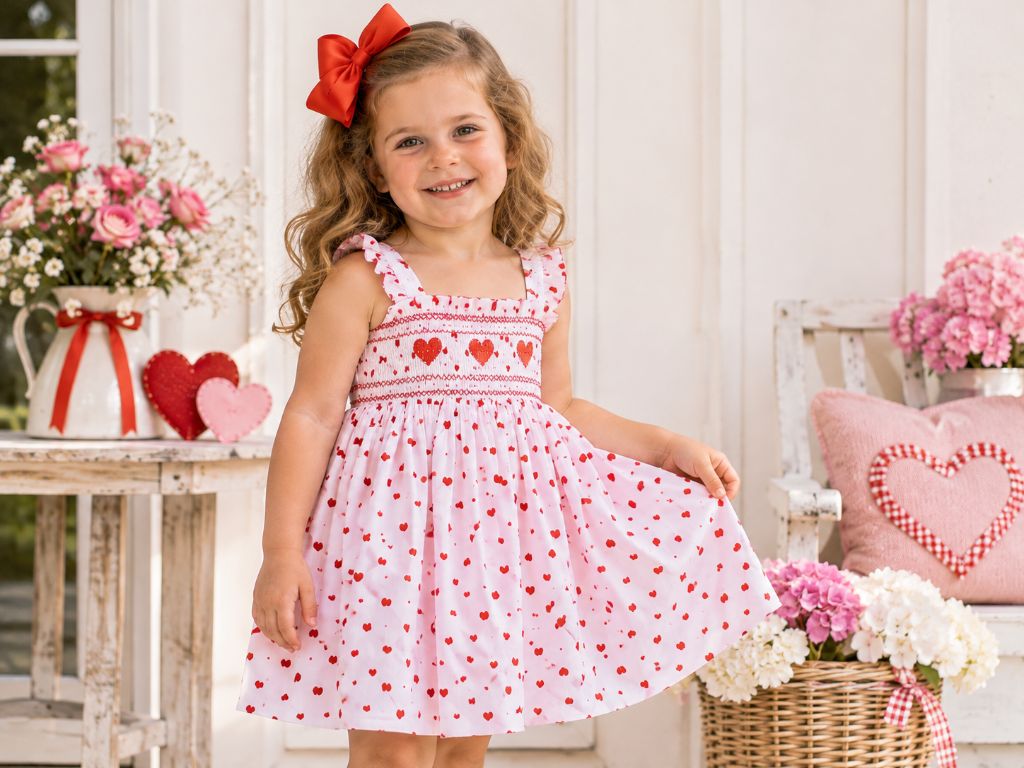
K-Embroidery’s Sleeveless Smocked Dress With Heart (SG101) combines heart-printed cotton with a smocked bodice and gathered skirt. The available size range includes 2T, 3T, and 4T, making it relevant to toddler collections.
The combination of printed fabric and smocking gives the dress a traditional touch without making the embroidery too prominent. For colder weather, parents may prefer a design with sleeves or a suitable extra layer.
Classic Hand-Smocked Valentine Dresses
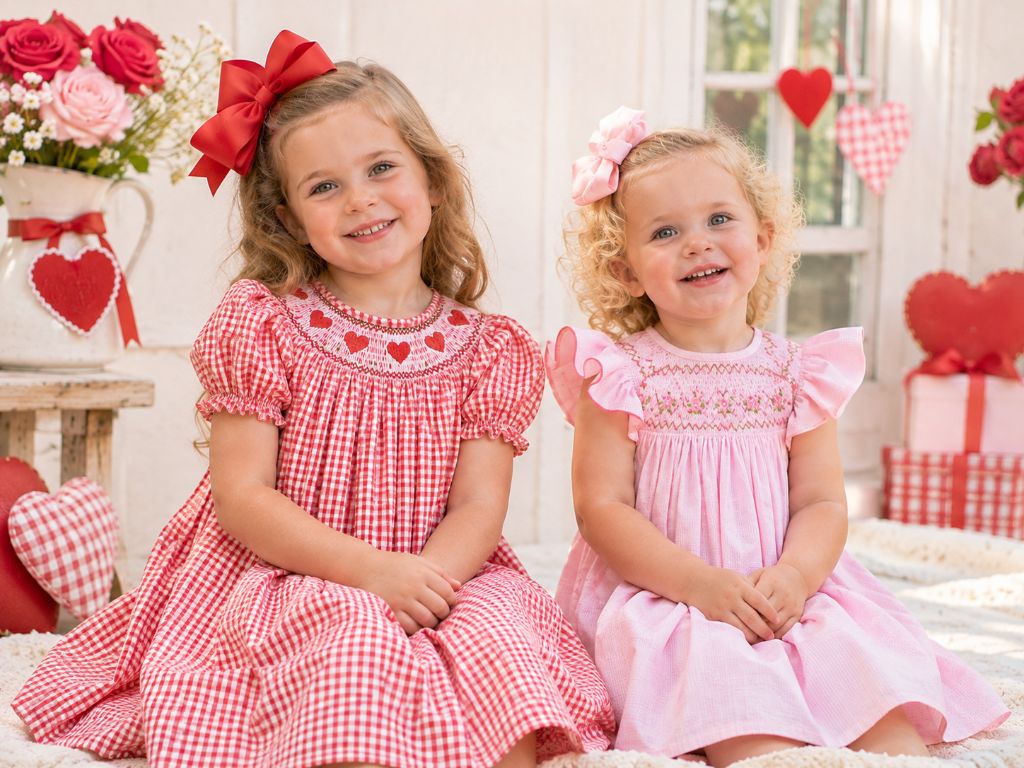
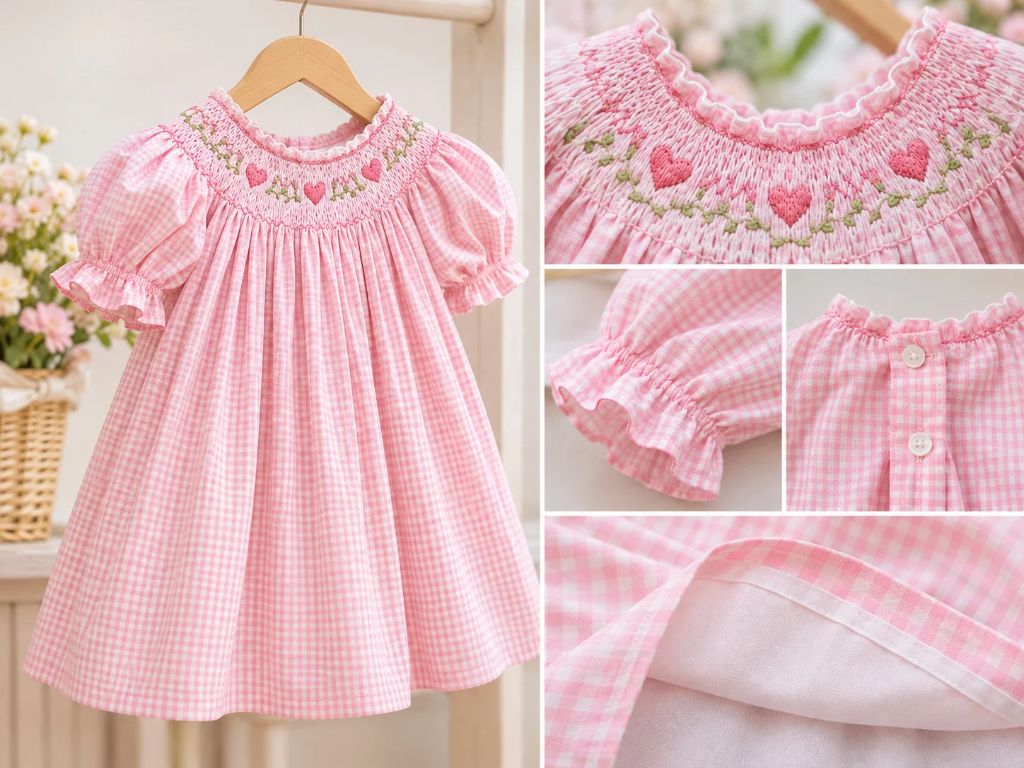
For families who prefer traditional children’s clothing, hand-smocked dresses offer a different look from printed or sequined styles. K-Embroidery’s Valentine Heart Hand Smocked Bishop Dress Collection places embroidered hearts around the gathered neckline. The bishop silhouette has a flowing body, allowing the embroidery to stand out without a heavily decorated skirt.
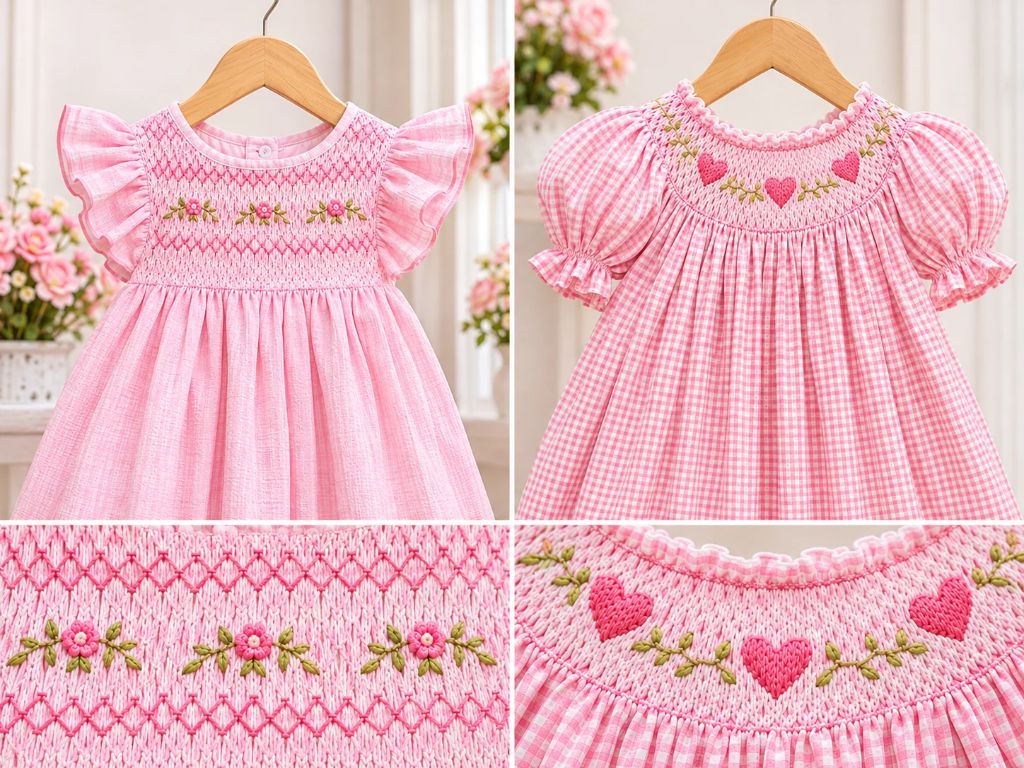
Another example is the Simple Smocked Pattern Baby Pink Dress (SG99). Made from 100% cotton, it features geometric smocking, floral embroidery, and angel-wing sleeves.
This softer design can also work for birthdays and spring gatherings, rather than Valentine’s Day alone.
Comparing Toddler Valentine Dress Styles
| Dress style | Main advantage | What to check | Suitable occasion |
| Cotton twirl | Soft skirt movement | Fabric weight and fit | Preschool |
| Layered tulle | Full, decorative shape | Lining and waistband | Photoshoots |
| Sequin dress | Bold Valentine details | Attachment security | Short celebrations |
| Knit or corduroy | Winter styling | Thickness and layering | Cold weather |
| Heart-print cotton | Simple holiday theme | Print placement | Casual parties |
| Hand-smocked bishop | Traditional embroidery | Neckline construction | Family portraits |
How to Choose a Toddler Valentine Dress by Fabric and Fit
When selecting a toddler Valentine dress, fabric and size deserve as much attention as the color or embroidery. A dress should allow comfortable movement, especially around the chest, shoulders, armholes, and neckline.
Knit and Woven Cotton Have Different Fits
Knit fabrics naturally stretch because their yarns form interlocking loops. Woven cotton usually has less stretch unless it contains elastane or uses a special construction.
For woven dresses, the garment pattern must provide enough room for movement. Smocking can add flexibility to gathered areas, but it cannot correct an incorrectly sized bodice. Soft 100% cotton may be worth considering for children with sensitive skin. However, cotton alone does not guarantee that a garment will be irritation-free. Dyes, trims, seams, and finishing treatments also affect comfort.
Factory insight: When a boutique changes a design from knit to woven cotton, the original pattern may need adjustment. Copying the same measurements without considering fabric stretch can affect the finished fit.
Understanding Toddler Dress Sizes
Size labels such as 2T, 3T, and 4T provide useful references, but garment measurements can vary between styles. K-Embroidery’s children’s clothing size guide publishes these approximate manufacturing tolerances:
| Construction | Published tolerance |
| Woven clothing | ½ inch (1.27 cm) |
| Knit clothing | ¾ inch (1.91 cm) |
These figures describe acceptable production variations. They are not additional ease allowances or instructions to size up. Parents should compare the child’s chest and height with the size chart for the specific dress. For boutique owners, confirming finished measurements before production helps reduce misunderstandings when checking completed garments.
Why Garment Finishing Matters
A beautiful embroidery panel does not tell the whole story of a dress. The neckline, armholes, fastenings, and inside seams also need careful finishing.
The Smocking Arts Guild of America discusses techniques such as French seams, bound seams, and bias bindings in heirloom sewing. These methods can create neat, comfortable finishes when used appropriately. For a hand-smocked bishop, the neckline deserves particular attention because it connects the gathered fabric, embroidery, and garment opening.
What Makes Hand-Smocked Valentine Dresses Different?
Hand smocking has both a decorative and a structural purpose. According to the Smocking Arts Guild of America, traditional English smocking uses stitches worked over closely prepared fabric pleats. The stitches hold the pleats together while allowing flexibility in the gathered area. This makes hand smocking different from an embroidered heart placed on flat fabric.
Geometric Smocking Versus Picture Smocking
Two common approaches are geometric smocking and picture smocking. Geometric smocking uses repeated stitches to form lines, waves, and diamond patterns. Cable, wave, and trellis stitches are often part of these designs.
Picture smocking creates recognizable figures, such as hearts, flowers, or animals, through closely arranged stitches. A geometric pattern depends on even spacing. A picture-smocked heart needs enough pleats and stitch rows to maintain its shape. This difference is visible when comparing SG99’s geometric embroidery with a bishop dress featuring Valentine heart motifs.
Why Embroidery Placement Needs Planning
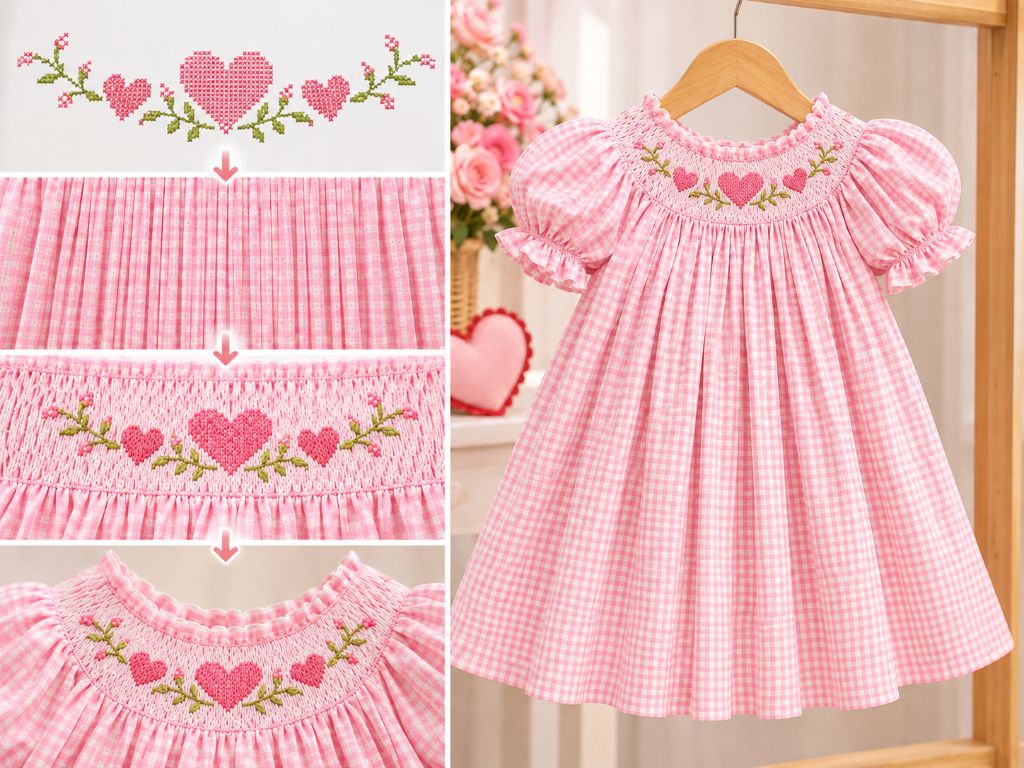
A printed heart begins as artwork on fabric. When that fabric is gathered, parts of the printed design may become hidden in the folds. Picture smocking follows a different process. The fabric is pleated first, and the heart is formed through embroidery stitches.
The designer must consider the motif’s width, stitch arrangement, and available space. On a bishop dress, the decorative area follows the neckline. Artwork that looks balanced on a computer screen may therefore need adjustments before embroidery.
A useful production check is to compare the embroidery artwork with the completed smocked panel and the assembled garment. The final dress shows whether the motifs remain balanced after sewing.
Wholesale Toddler Valentine Dress Production for Boutiques
A boutique collection needs attractive designs, but it also needs clear production specifications. A cotton heart-print dress, a hand-smocked bishop, and a matching bloomer set may share the same Valentine colors. Their patterns, measurements, and embroidery requirements will still differ.
K-Embroidery’s Cupid’s Sweetheart Bloomer Set illustrates another approach to Valentine clothing, using printed woven cotton, heart-shaped pockets, and matching bloomers. For boutiques, these styles can serve different customer preferences without repeating the same silhouette.
What Should Buyers Approve Before Production?
Custom smocked clothing requires more than approval of a digital mockup. The embroidery panel, finished neckline, and size measurements all affect the final appearance.
| Approval stage | What buyers should check |
| Embroidery artwork | Motif shape, colors, and stitch arrangement |
| Smocked panel | Pleat consistency and embroidery placement |
| Finished sample | Neckline, seams, buttons, and garment proportions |
| Size development | Measurements and embroidery proportions across sizes |
| Branding | Label artwork and placement |
A bishop neckline and a flat yoke provide different areas for embroidery. Even if the same heart motif is used, the smocking plate may need adjustment. Reviewing these details before bulk production gives buyers a clearer understanding of the approved design.
Custom Valentine Dresses With K-Embroidery
K-Embroidery offers free custom 2D mockup development, hand embroidery, and OEM/ODM manufacturing for children’s boutiques.
For an accurate quotation, buyers should provide the preferred silhouette, fabric, embroidery reference, size breakdown, estimated quantity, and intended delivery date.
Current sales arrangements may support orders starting at 15 pieces per design, depending on the specifications. As the published website FAQ lists different minimums for custom and ready-made designs, buyers should confirm the applicable MOQ in writing.
The published Sample Policy lists $25 for a simple smocked sample and $39 for a complicated design. The estimated sample production time is approximately 2 weeks for 1–10 pieces, with additional time possible for complex designs.
Bulk prices and production schedules are quoted separately.
For garments entering the US market, buyers should also confirm applicable product safety requirements. The US Consumer Product Safety Commission provides information on clothing flammability under 16 CFR Part 1610.
Relevant textile labeling requirements are explained in the Federal Trade Commission’s guidance.
FAQs About Toddler Valentine Dresses
Parents often have a few practical questions about caring for Valentine outfits and checking their fit before purchasing.
How should I wash a hand-smocked Valentine dress?
Follow the garment’s care label. Gentle washing and avoiding strong rubbing around embroidered areas may help protect delicate stitches.
How do I know if a toddler dress is too long?
Check the finished dress length against your child’s height. The hem should not interfere with walking, climbing steps, or ordinary play.
What should I check when buying a toddler Valentine dress online?
Look for garment measurements, fabric information, front and back photographs, and close-ups of decorative details. For hand-smocked styles, neckline and embroidery photographs are particularly useful.
Is 100% cotton always safe for sensitive skin?
No fabric is guaranteed to suit every child. Soft cotton may be comfortable, but dyes, seams, trims, and finishing treatments can also affect skin sensitivity.
Can K-Embroidery customize Valentine dresses for boutiques?
Yes. K-Embroidery supports custom garments, hand embroidery, 2D mockups, and private-label manufacturing. Buyers can submit reference designs for technical review and quotation.
Explore our Valentine’s collection and discover your next boutique bestseller!
Get our full Valentine collection catalog, FOB pricing, and sample details from a direct Vietnam factory. MOQ from 15 pieces, OEM/ODM welcome.