Toddler Easter Dress Ideas and Key Production Insights
Quick Answer
A toddler Easter dress is a spring-themed outfit for girls aged approximately 1-4, designed for Easter celebrations and family activities. Popular styles include hand-smocked bishop dresses, pastel tulle dresses, and floral cotton sundresses. Comfortable fabrics, suitable armholes, and practical skirt lengths are important for active toddlers. Custom designs also require attention to embroidery quality and finished measurements.
Choosing a toddler Easter dress involves more than pastel colors and bunny embroidery. If a child will attend church, take family photographs, and join an egg hunt, her dress needs to allow comfortable movement.
For boutiques, selecting suitable designs also means considering fabric quality, consistent sizing, and production feasibility.
At K-Embroidery, we manufacture hand-smocked and embroidered children’s clothing for boutiques and private-label brands. This guide covers Easter dress styles, garment quality, wash care, and common custom manufacturing challenges.
Which Toddler Easter Dress Styles Should You Consider?
Three popular toddler Easter dress styles include traditional smocked dresses, decorative tulle dresses, and floral cotton designs. Each suits different occasions and activities.
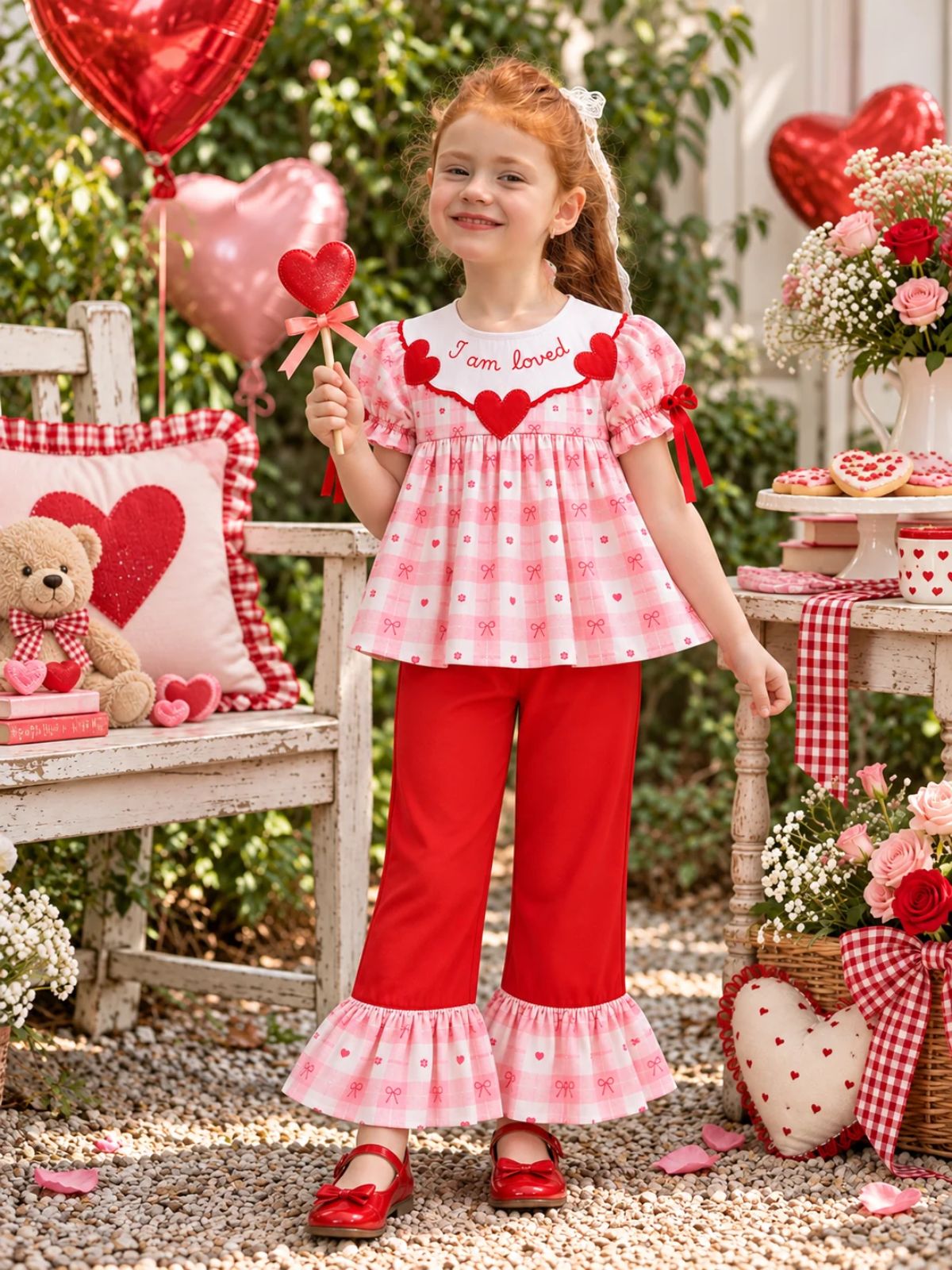
Classic Smocked and Bishop Easter Dresses
A smocked toddler Easter dress features gathered fabric secured with decorative embroidery.
Bishop dresses have gathered necklines and flowing skirts, while smocked yoke dresses feature embroidery across the bodice.
Traditional Easter motifs include bunnies, chicks, ducklings, flowers, and Easter eggs. Pastel pink, baby blue, lavender, and soft yellow are familiar color choices. For a coordinated collection, boutiques can pair these dresses with matching bloomers or bonnets.
These dresses suit church services, Easter brunches, and family portraits.
However, a loose skirt does not guarantee comfort. The neckline, chest, and armholes still need appropriate measurements.
For more seasonal outfit inspiration, explore our baby girl Easter dress ideas, featuring different silhouettes and embroidered designs.
Pastel Tulle and Twirl Dresses
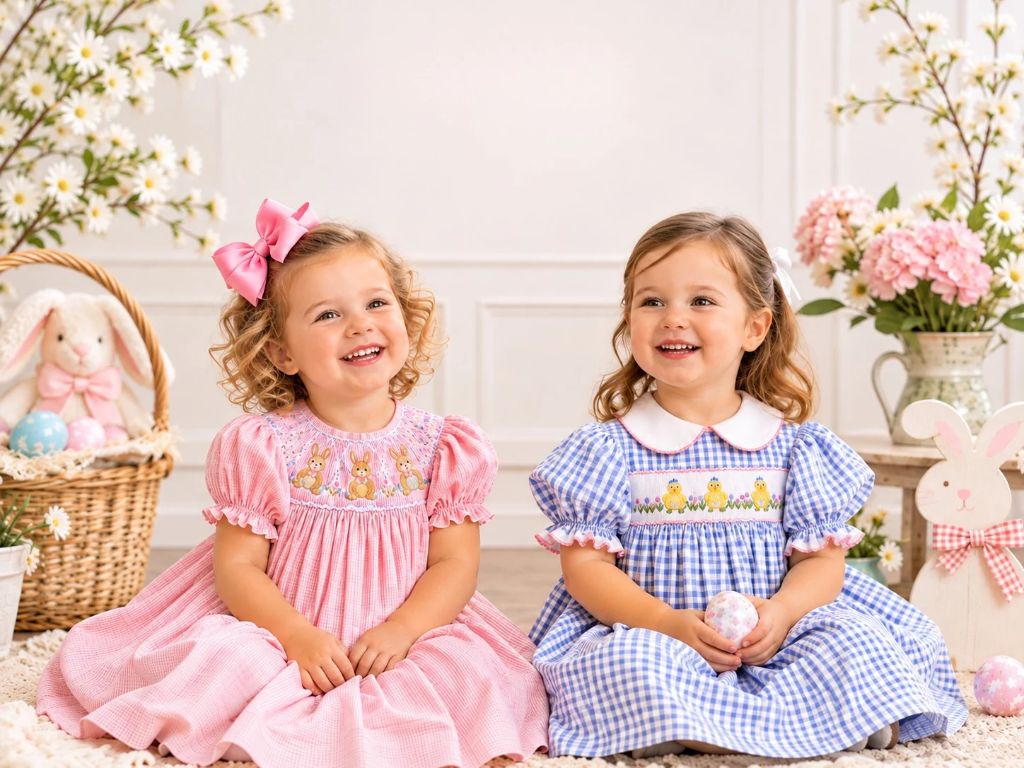
Tulle toddler Easter dresses use lightweight netting to create fuller skirts, often combined with embroidered bodices or floral decorations.
They suit Easter parties and family photographs.
However, excessive tulle layers can create bulky waist seams. Stiff netting may also irritate the skin without suitable lining.
For active toddlers, buyers should consider skirt length, lining coverage, and waist construction rather than decorative volume alone.
Floral Cotton and Ruffle Dresses
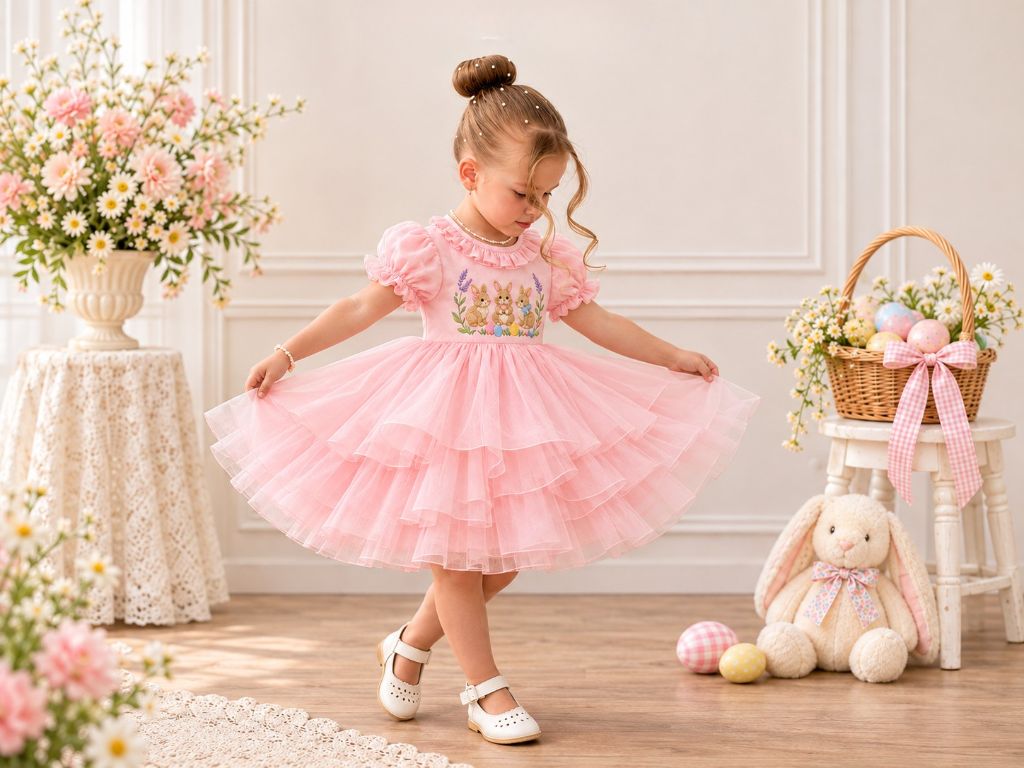
Floral toddler Easter dresses offer a lightweight alternative to formal occasionwear.
Popular designs include cotton A-line dresses, gingham sundresses, flutter sleeves, and gathered skirts.
These styles suit egg hunts and outdoor gatherings. Floral designs without prominent Easter-specific motifs can also be worn for other spring occasions.
Manufacturer’s Insight: Match the Style to the Occasion
Traditional smocked dresses suit formal celebrations, while simpler cotton designs can accommodate more active play.
Boutiques can offer different silhouettes rather than repeating bunny embroidery across every design.
How to Choose a Comfortable Toddler Easter Dress
Toddlers need clothing that allows walking, bending, sitting, and playing.
A dress may look correctly fitted while standing but feel restrictive when the child raises her arms or crouches.
Four Details That Affect Comfort
Here are four key details to consider when choosing a comfortable toddler Easter dress:
- Chest and armholes: Allow enough wearing ease for movement.
- Skirt length: Avoid hems that interfere with walking or bending.
- Lining: Use suitable inner layers for tulle or rough fabrics.
- Seam construction: Check bulky waist seams and gathered trims.
For example, a bishop dress may have a loose skirt but a narrow neckline. Similarly, a tulle dress may fit around the chest while its thick waist seam makes sitting uncomfortable.
For additional guidance on selecting outfits for different celebrations, read our Easter outfit styling tips.
Which Fabrics Should You Choose?
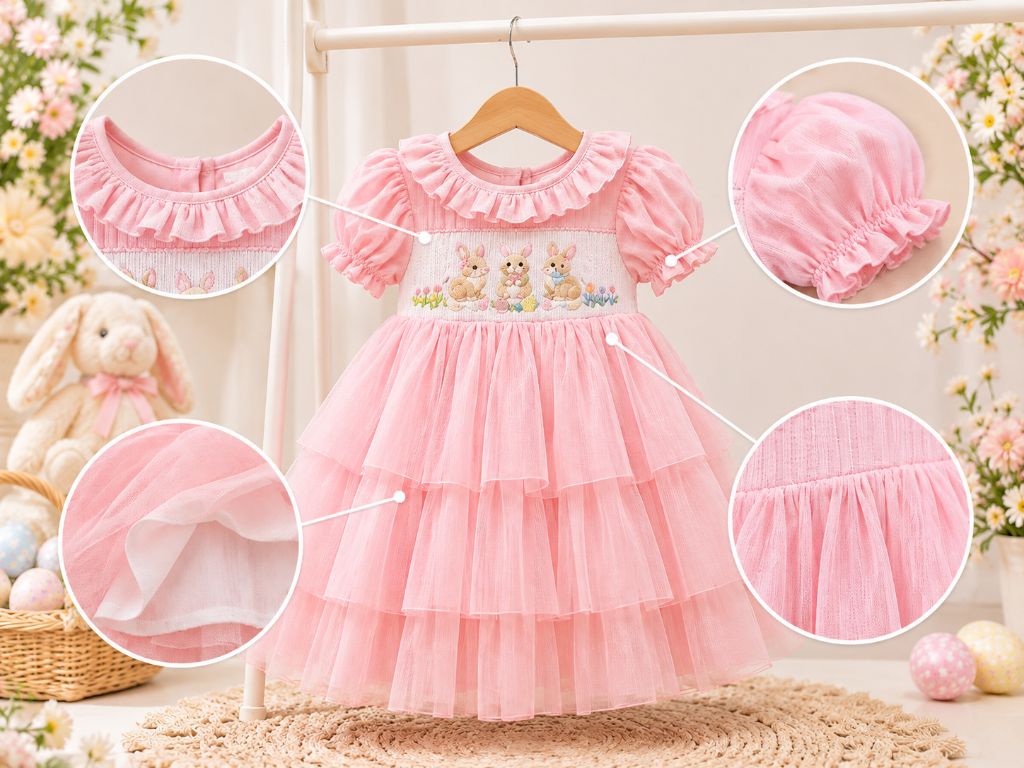
At K-Embroidery, we commonly use woven cotton poplin weighing approximately 110-135 GSM for traditional smocked dresses.
Its stable structure supports pleating, embroidery, and gathered construction.
Cotton batiste offers a lighter drape for bishop dresses. Cotton knit provides additional stretch for casual styles, while tulle requires suitable lining for comfort.
Manufacturer’s Advice: Choose Fabric Based on the Intended Use
For outdoor egg hunts, consider fabric flexibility and comfortable movement. For formal celebrations, fabric structure and silhouette may be more important.
Not every soft fabric supports detailed embroidery equally well. The material should suit both the design and its intended use.
Why Finished Measurements Matter
Toddler sizes commonly include 12M, 18M, 24M, 2T, 3T, and 4T, but age labels are not universal measurements.
Boutiques should review finished chest width, armholes, and garment length before approving custom orders.
For smocked dresses, the completed panel width must also match the approved specifications.
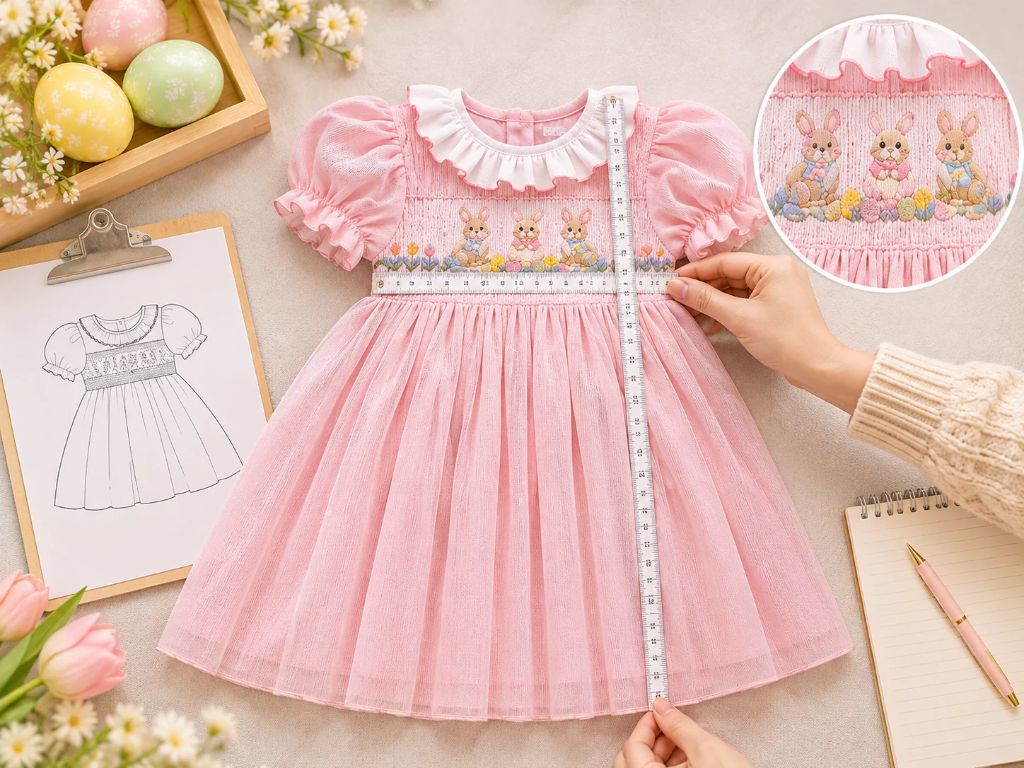
How Does K-Embroidery Maintain Hand-Smocked Easter Dress Quality?
At K-Embroidery, our hand-smocked garments are 100% hand-embroidered by skilled Vietnamese artisans, rather than using machine embroidery to imitate traditional smocking.
Each panel requires careful control of pleat distribution, stitch tension, embroidery placement, and finished dimensions.
For readers unfamiliar with this technique, our guide explains how traditional smocked dresses are made and the details that distinguish hand smocking from machine-made alternatives.
Why Stitch Tension Matters
Uneven or excessive embroidery tension can cause fabric puckering, distorted motifs, or inconsistent panel widths.
Our artisans focus on balanced stitches and controlled gathering. Production checks help identify irregular pleats and unwanted distortion before garment assembly.
Why a Beautiful Smocked Panel May Still Measure Incorrectly
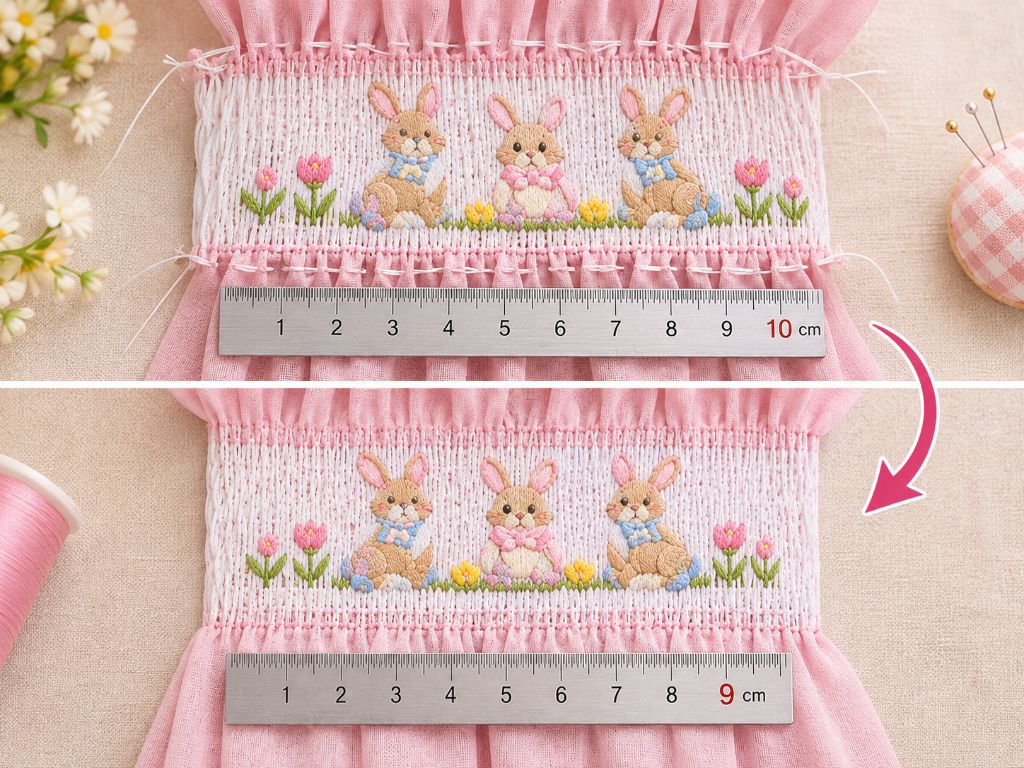
A smocked panel may look balanced while temporary gathering threads hold the fabric.
However, its dimensions can change after those threads are removed.
For example, if the approved finished width is 10 cm but the completed panel measures 9 cm, the difference is 1 cm, or 10% of the target.
This hypothetical example illustrates why finished measurements matter; it is not a K-Embroidery defect record or accepted tolerance.
Factory Insight: Hand-Smocking Quality Goes Beyond Appearance
A well-made panel should have evenly distributed pleats, consistent embroidery tension, and accurate finished dimensions. At K-Embroidery, skilled handwork and quality checks help minimize unwanted puckering and support shape stability during appropriate washing. However, wash performance also depends on fabric shrinkage, garment construction, and care methods. Boutique buyers can review close-up photographs and approve the pre-production sample before bulk manufacturing.
Which Toddler Easter Dress Details Can Lose Shape After Washing?
A toddler Easter dress may look structured when new but change appearance after laundering.
Smocked panels, puff sleeves, ruffles, and tulle skirts deserve particular attention.
Common Changes After Washing
- Smocked panels: Fabric shrinkage or unsuitable washing may cause puckering or width changes.
- Puff sleeves: Lightweight fabrics may soften and lose some rounded volume.
- Ruffle collars: Shrinkage or seam puckering can create uneven edges.
- Tulle skirts: Improper washing or storage may compress or distort the layers.
Balanced embroidery and suitable construction help reduce these problems, but no technique eliminates every effect of fabric shrinkage.
Easter Dress Quality Checklist
| Dress Detail | Potential Problem | Recommended Check |
| Smocked panel | Puckering or width changes | Finished width and stitch consistency |
| Puff sleeves | Reduced volume | Gathering and fabric behavior |
| Ruffle collar | Uneven appearance | Seam finishing and shrinkage |
| Tulle skirt | Distorted fullness | Lining and layer construction |
| Embroidery | Loose threads | Stitch finishing and backing |
| Contrasting fabrics | Color transfer | Appropriate colorfastness testing |
Manufacturer’s Note: Evaluate the Finished Garment
A dress may look attractive immediately after production but behave differently after washing.
For custom Easter collections, boutiques can request a sample wash evaluation when durability is a priority.
Testing should follow the proposed care instructions and consider the complete garment, not only the embroidered panel.
Which Custom Easter Dress Requests May Need Adjustments?
Custom Easter dresses often begin with reference photographs or digital mockups. However, some details require adjustments for production feasibility, comfort, or safety.
Extremely Detailed Bunny Embroidery
Tiny bunny faces, whiskers, flowers, and lettering may become crowded on smaller smocked panels.
A motif designed for size 4T may not fit the same way on size 12M.
Suggested alternative: Simplify small details, adjust spacing, or reduce the number of motifs.
Excessively Full Tulle Skirts
Adding stiff tulle layers can increase waist bulk and affect sitting comfort.
Suggested alternative: Adjust the gathering ratio, tulle properties, or lining construction before increasing the number of layers.
Dense Embroidery on Delicate Fabrics
Lightweight or unstable fabrics may require additional support during embroidery. Dense stitching can also affect drape.
Suggested alternative: Modify stitch density, use suitable stabilization, or select another base fabric.
Small Decorative Beads or Loose Attachments
Beads, pearls, and small charms may create safety concerns if they detach from children’s garments.
Suggested alternative: Consider embroidery or suitable fabric appliqués. Any revised design still requires the relevant safety assessment.
Manufacturer’s Insight: Review Feasibility Before Sampling
When a requested detail is difficult to manufacture, the factory should explain the limitation and suggest a practical alternative.
The goal is to preserve the original Easter design while using appropriate materials and construction.
Can You Change Easter Embroidery at the Last Minute?
At K-Embroidery, custom embroidery changes may be requested before fabric pleating begins, subject to design approval.
Once fabric pleating has begun, embroidery design changes are no longer accepted under our standard production policy.
Changing artwork after this stage may require preparing new panels and disrupt the manufacturing sequence.
Before approving the design, buyers should confirm the embroidery artwork, motif spacing, thread colors, placement, and panel dimensions.
A change that looks simple on a mockup may no longer be practical once fabric preparation has started.
What Can Delay a Custom Toddler Easter Dress Order?
Custom Easter orders pass through several approval stages. Delays often occur when important details remain unconfirmed or change after production planning.
Production Changes and Their Potential Impact
Changes made at different production stages can affect the timeline and require different adjustments, as shown below.
| Production Stage | Possible Issue | Production Impact |
| Before pleating | Artwork or thread color changes | Revisions may be reviewed |
| After pleating | Embroidery design changes | Not accepted under standard policy |
| Fabric preparation | Fabric or print changes | May require new sourcing |
| Sample approval | Fit or construction revisions | Additional sample work |
| Quantity confirmation | Extra sizes or quantities | Revised material requirements |
For example, increasing an order from 15 to 30 dresses may require additional fabric if materials were reserved for the original quantity.
The impact depends on material availability and production scheduling.
Factory Insight: A Short Approval Delay May Cause a Longer Production Delay
A two-day delay in approving artwork does not necessarily mean production will finish exactly two days later.
The factory may need to reorganize pleating, hand embroidery, cutting, and sewing schedules.
For seasonal Easter orders, confirming related details together helps reduce repeated revisions and scheduling uncertainty.
Boutiques preparing their first custom order can also review our wholesale ordering guide for the information needed when submitting an enquiry.
Explore Toddler Easter Dresses at K-Embroidery
At K-Embroidery, skilled Vietnamese artisans create hand-smocked garments using 100% hand embroidery.
We support custom artwork, fabric selection, garment development, private-label options, and free 2D mockup design.
Our standard wholesale MOQ generally starts from 15 pieces per design, with pricing based on the approved specifications.
For custom designs and wholesale pricing, contact K-Embroidery with your preferred styles, size range, and estimated quantities.
Frequently Asked Questions About Toddler Easter Dresses
Here are answers to common questions about toddler Easter dresses, garment quality, and custom embroidery.
What is the most comfortable toddler Easter dress?
A lightweight dress with comfortable armholes, suitable chest width, and a practical skirt length is a good choice. Cotton styles often suit outdoor activities, while lined smocked or tulle dresses may suit formal occasions.
Can hand-smocked Easter dresses become puckered after washing?
Yes. Shrinkage, uneven stitch tension, or unsuitable washing may affect their appearance. Careful construction reduces these risks, but garments should follow their recommended care instructions.
Can I change my Easter embroidery after placing an order?
Changes may be reviewed before fabric pleating begins. Once pleating has started, K-Embroidery does not accept embroidery design changes under its standard production policy.
Can the same bunny embroidery be used for every toddler size?
The same concept may be used, but smaller panels may require changes to motif dimensions, spacing, or quantity.
What should I do if my custom Easter design is difficult to produce?
Ask the manufacturer to review the artwork, fabric, and construction. Simplifying embroidery or changing materials may help preserve the design while improving production feasibility.
Explore our Easter’s collection and discover your next boutique bestseller!
Get our full Easter collection catalog, FOB pricing, and sample details from a direct Vietnam factory. MOQ from 15 pieces, OEM/ODM welcome.