Thanksgiving Smocked Dress: Turkey, Pumpkin & Bishop Style Guide
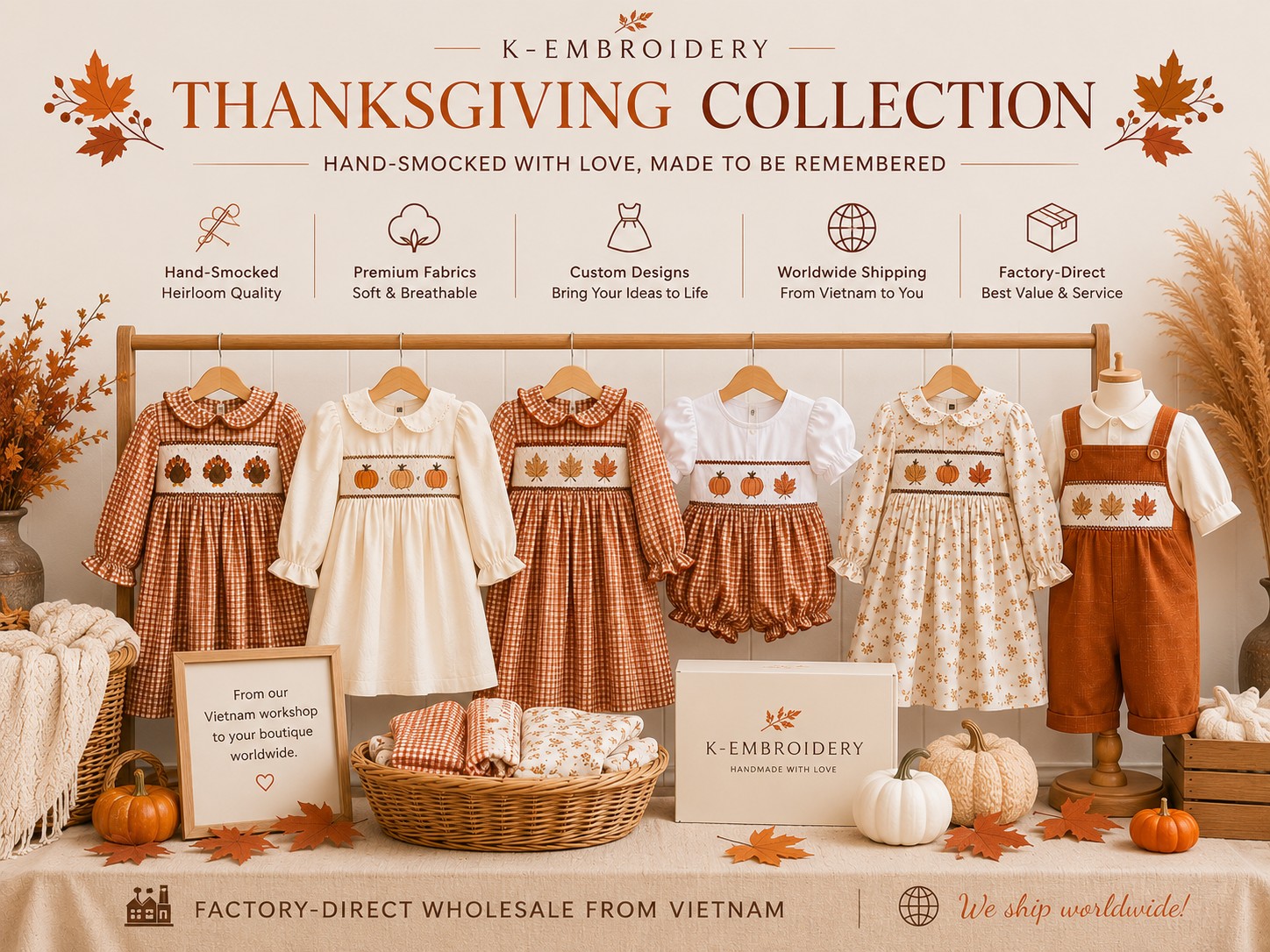
Quick Answer: A Thanksgiving smocked dress is a hand-pleated, hand-stitched holiday dress for baby and toddler girls, featuring seasonal motifs like turkeys, pumpkins, and fall leaves in rust, camel, and cranberry tones. The most popular silhouettes are bishop dresses, geometric smocked dresses, and smocked 2-piece sets, typically sewn in 100% woven cotton and retailing between $38 and $74.
A Thanksgiving smocked dress is the piece grandmothers recognize from across the dining room — the hand-pleated bodice, the tiny stitched turkeys, the full skirt that twirls before dinner. Smocked dresses are classic heirloom garments in which fabric is gathered into fine pleats and embroidered by hand, a technique that has dressed children for special occasions since the 1800s. For Thanksgiving, that tradition meets harvest plaids, gingham checks, and motifs pulled straight from the season.
If you’re deciding between a turkey bishop and a pumpkin 2-piece set — or you run a boutique and want to know which smocked styles actually sell in November — this guide breaks down every popular design, how real hand smocking differs from the machine-made lookalikes, and what to check before you buy.
What Is a Thanksgiving Smocked Dress?
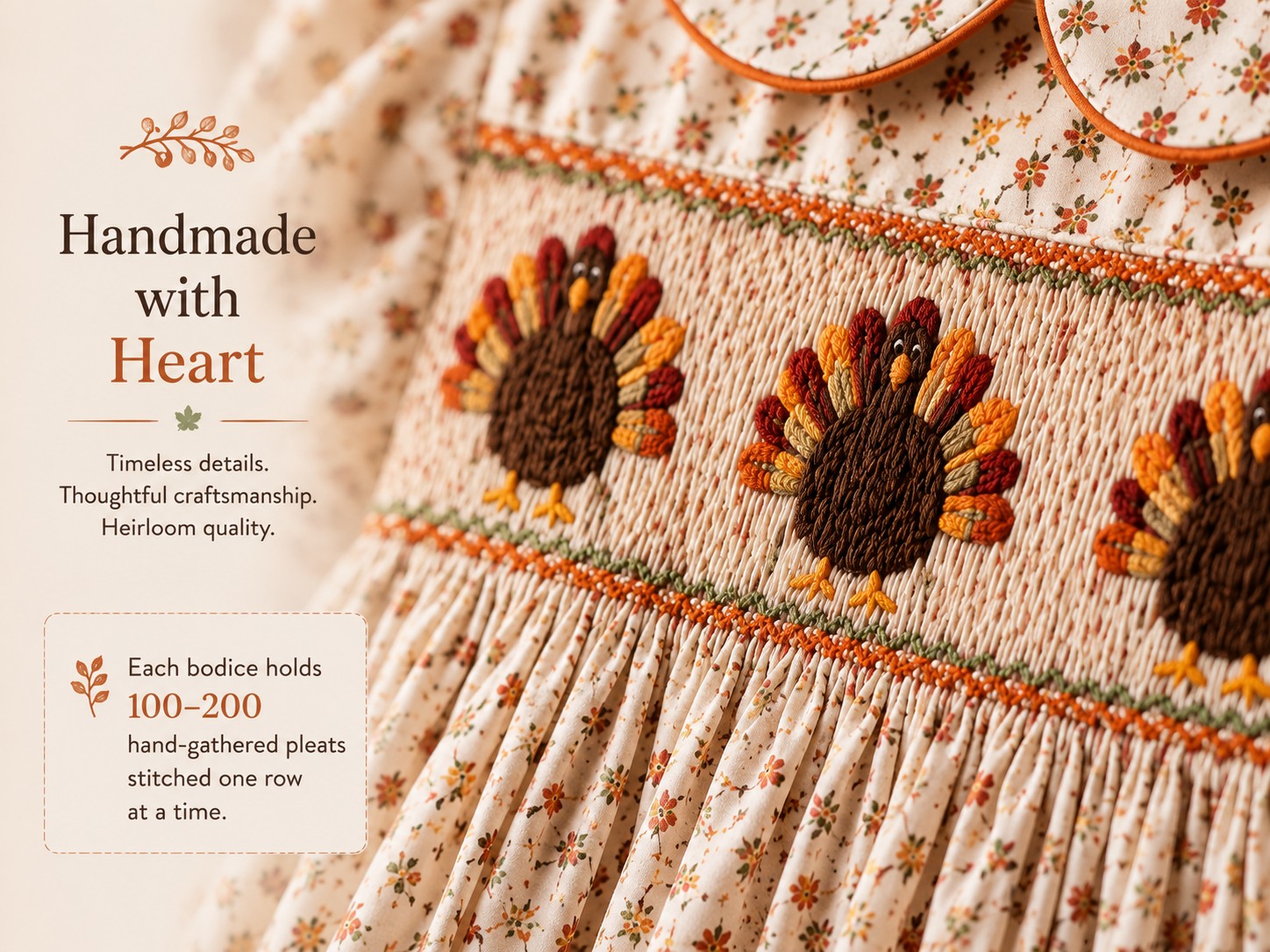
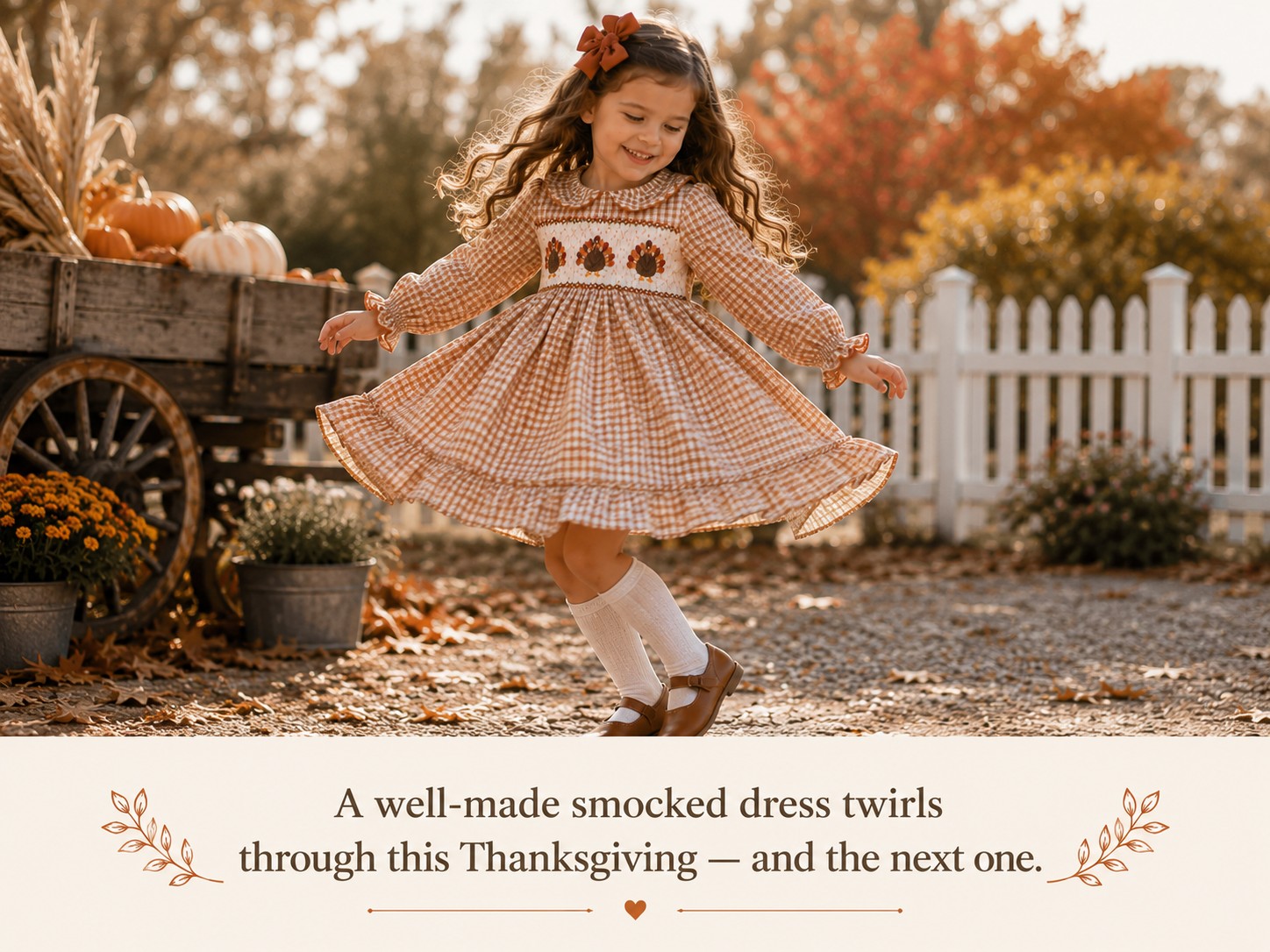
Smocking is a hand-embroidery technique worked over pleated fabric: the material is first gathered into dozens of tiny, even pleats, then decorative stitches are worked across those pleats to hold and adorn them. A single smocked bodice can contain 100–200 pleats and take 6–10 hours of stitching. The result is a stretchy, textured panel that holds its shape wash after wash — the reason genuine smocked dresses get passed from sister to sister.
A Thanksgiving smocked dress applies this technique to the holiday’s visual language: hand-smocked turkeys, embroidered pumpkins, falling-leaf motifs, and autumn palettes of rust, camel, cranberry, mustard, and chocolate brown, usually set on gingham, pinstripe, or harvest plaid cotton. For a deeper look at the craft itself, see our explainer on what a smocked dress is.
Top Thanksgiving Smocked Dress Styles & Motifs
Three motif families dominate the Thanksgiving smocked market, and each pairs naturally with certain silhouettes. Here’s what to look for.
Turkey Smocked Dresses
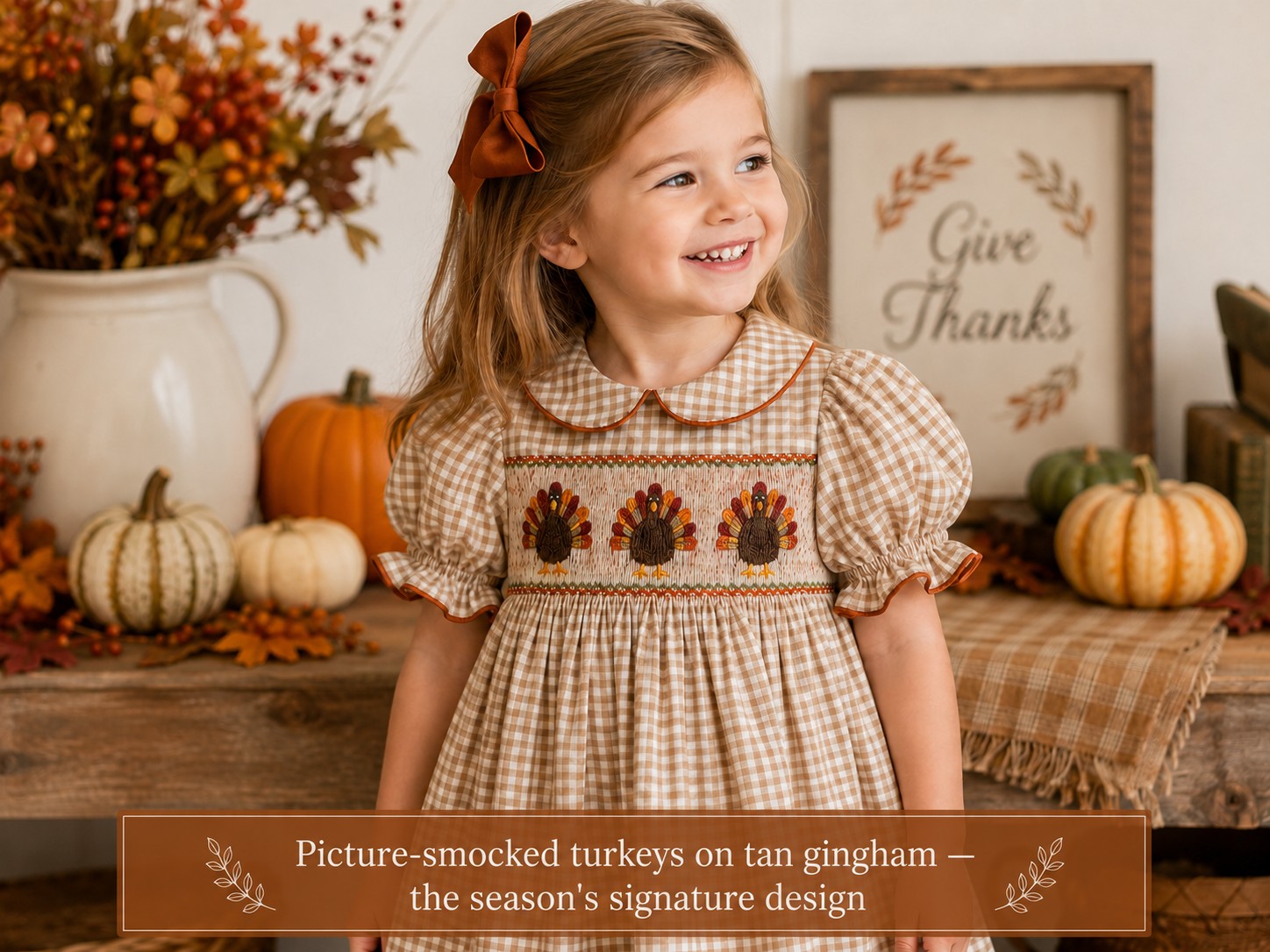
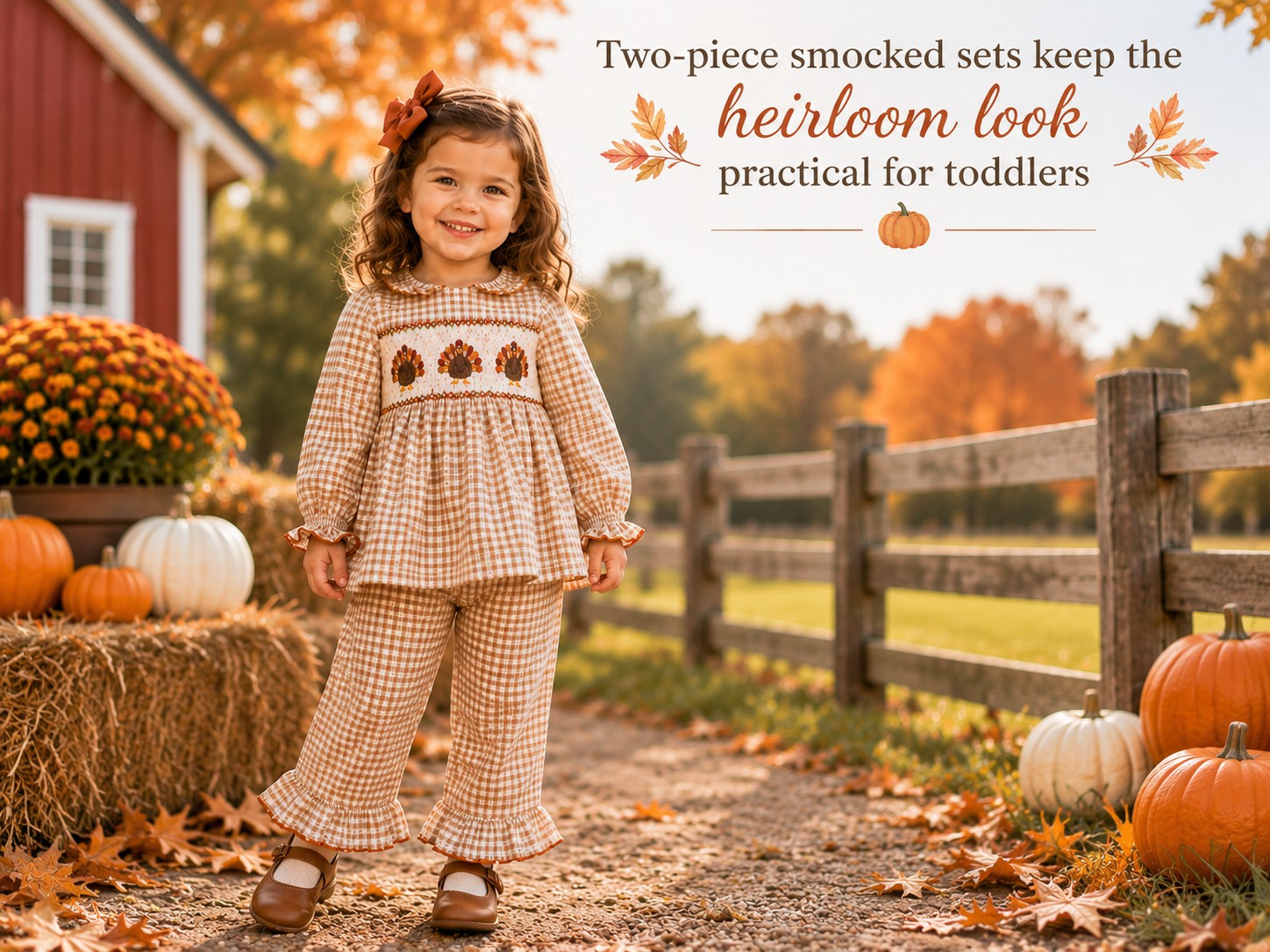
The turkey is the headline motif of the season. On quality pieces, turkeys are picture-smocked — stitched directly into the pleats across the chest — or worked as French-knot embroidery, where hundreds of tiny knotted stitches build up the bird’s feathered texture. Turkey designs pair beautifully with tan and brown gingham or classic fall plaid, and they anchor coordinating sibling sets: a turkey dress for sister, a matching turkey jon jon or longall for brother, like our Thanksgiving boy smocked romper.
Pumpkin Smocked Dresses
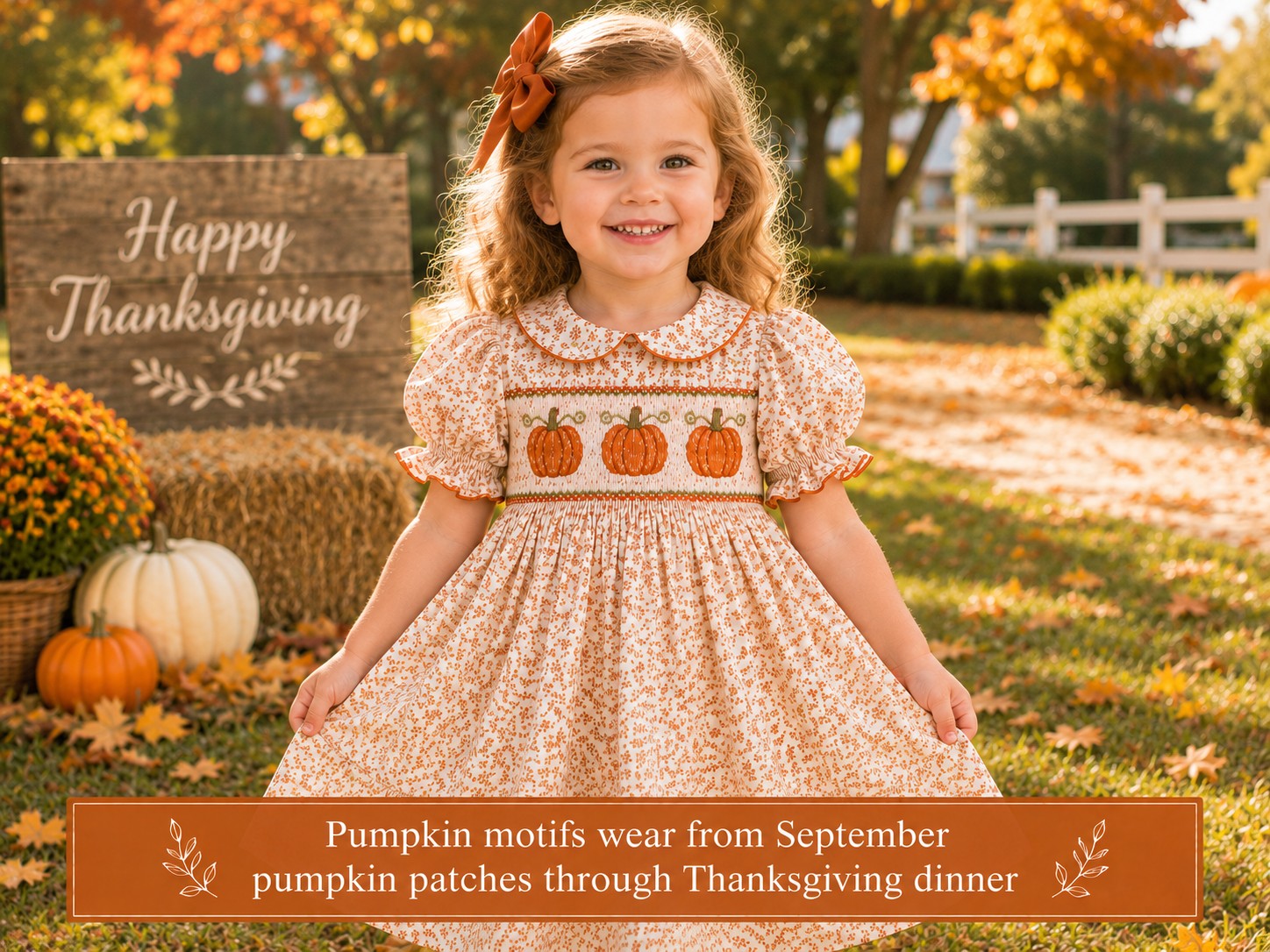
Pumpkin motifs are the smart buyer’s secret: they read as Thanksgiving in November, but they also work from the first pumpkin-patch visit in late September. Embroidered pumpkins, harvest vines, and orange-and-cream palettes give a pumpkin smocked dress a wearing season of nearly three months — triple that of a turkey design.
Smocked Bishop Dresses
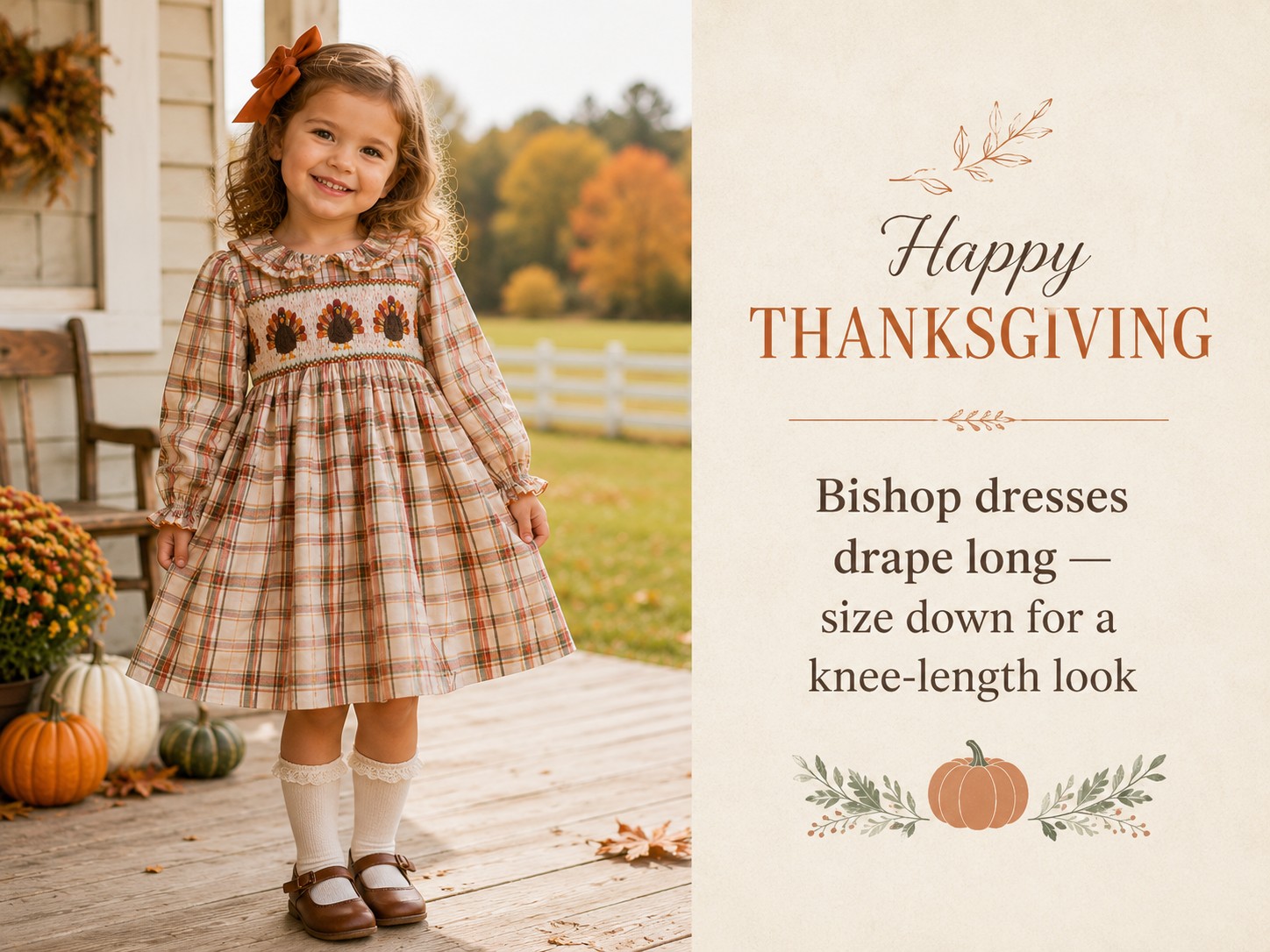
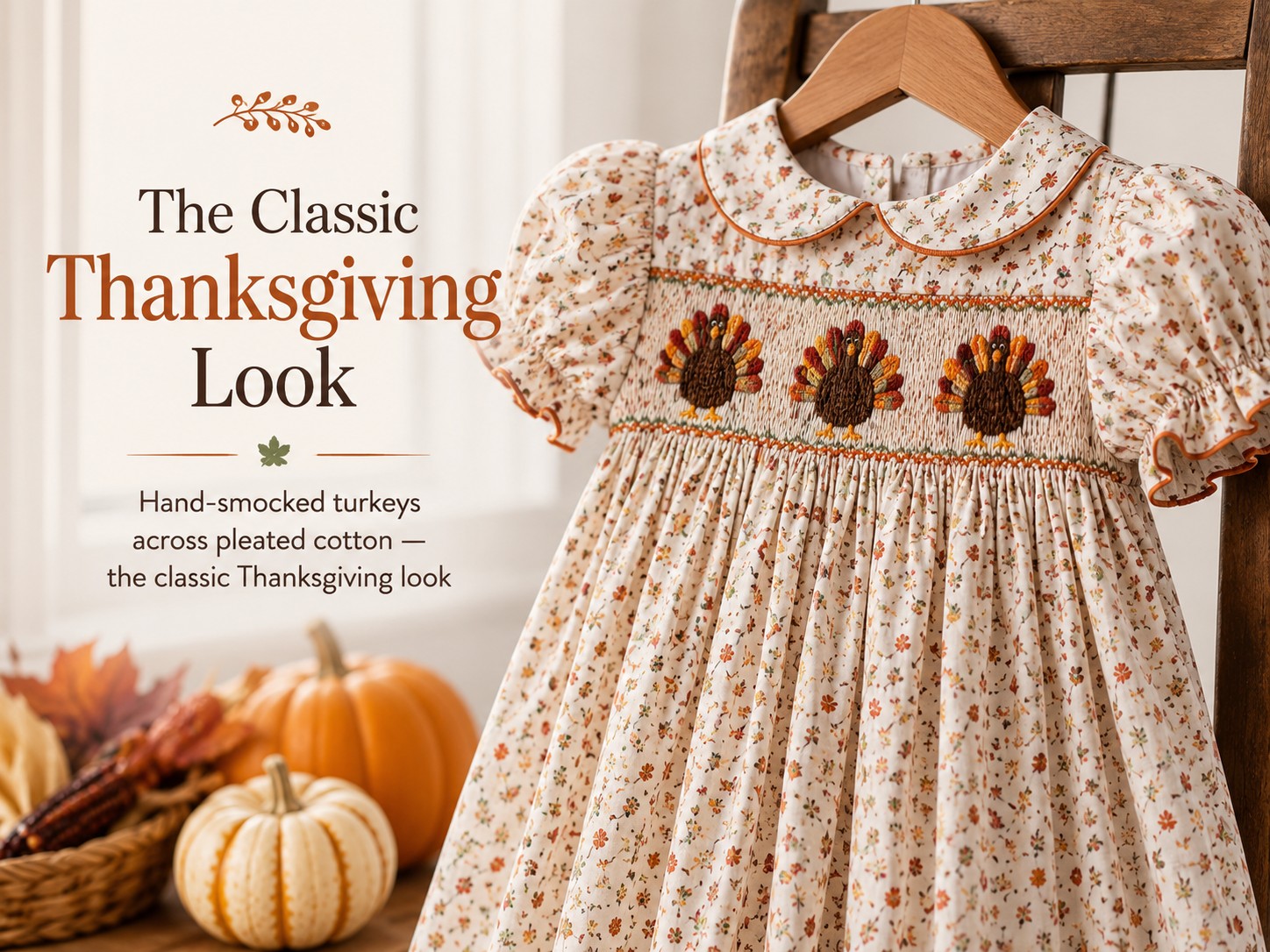
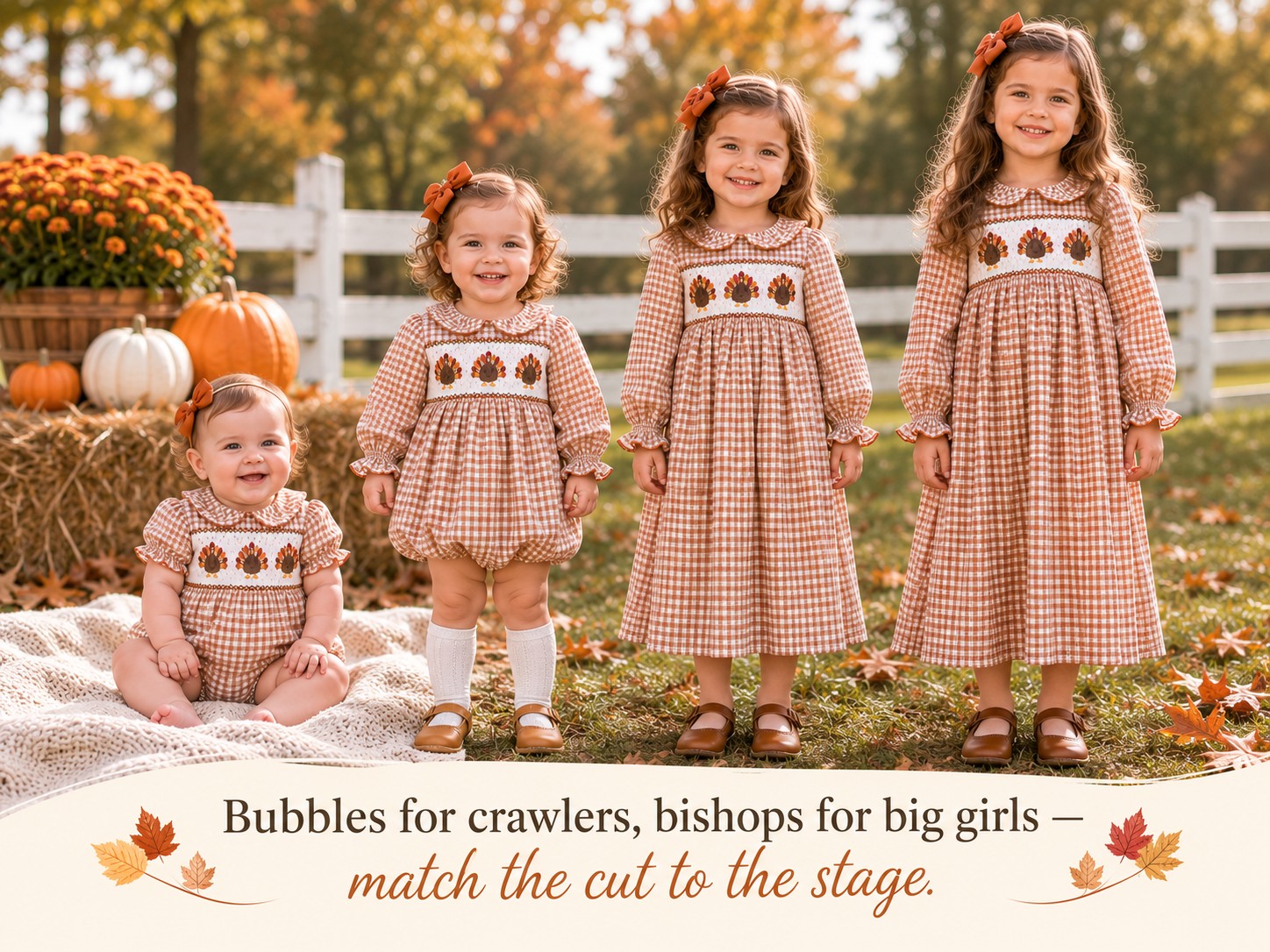
The bishop is the most formal Thanksgiving silhouette: smocking radiates from a round neckline over the chest, and the skirt falls loose and long — often toward the ankle. Bishops photograph beautifully at candlelit tables and layer easily over tights and a cardigan. One important fit note: because bishops are cut long by design, many parents order one size down for a knee-length fit. Browse the full range of cuts in our smocked bishop dress collection.
Geometric Smocked Dresses
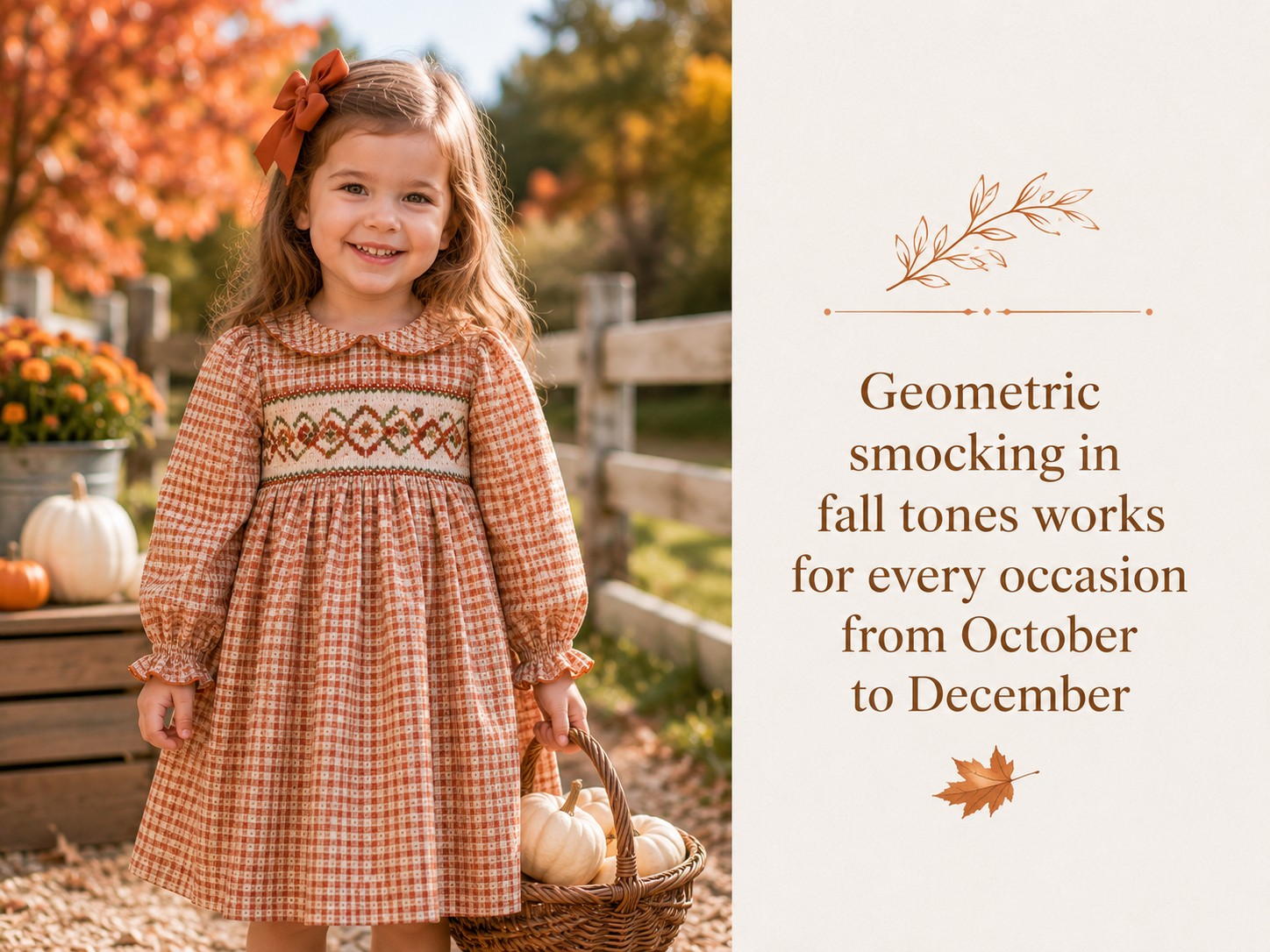
Not every family wants a turkey on the chest. Geometric smocking — diamonds, waves, and chevrons worked in autumn threads on solid rust, cranberry, or camel cotton — delivers the heirloom texture without a holiday-specific motif. These are the dresses that reappear at Christmas dinner and next fall’s family photos.
Smocked 2-Piece Sets and Bubbles
For crawlers and busy toddlers, smocked bubbles (elasticated-leg one-pieces) and 2-piece sets carry the same hand-stitched detail in play-proof formats. A smocked top with harvest-print bloomers survives the kids’ table far better than a floor-length bishop — and gives boutiques an under-$40 retail entry point into the category.
Hand-Smocked vs. Machine-Shirred: How to Tell Before You Buy
Half the “smocked” Thanksgiving dresses sold online are not smocked at all — they’re shirred, with rows of elastic thread machine-sewn in minutes. The difference shows up in the second wash and in the resale drawer. Here’s a 4-step check:
Step 1 — Look at the pleats. True smocking shows deep, even, vertical pleats with embroidery riding on top. Shirring shows flat fabric puckered by elastic rows, with no separate stitched design.
Step 2 — Check the motif. Picture-smocked turkeys and pumpkins are built stitch-by-stitch into the pleats and look slightly dimensional. Printed or heat-pressed motifs sit flat on the surface.
Step 3 — Read the fabric. Heirloom smocking is worked on 100% woven cotton. If the listing says polyester knit, the “smocking” is elastic shirring.
Step 4 — Sanity-check the price. Hand smocking takes 6–10 hours of skilled labor per dress. A genuine piece retails at $38–$74; a “$12.99 smocked dress” is machine shirring, every time.
🌽 Factory Insight: The fastest authenticity test is the stretch test. Gently stretch the smocked panel sideways: hand smocking springs back into crisp pleats because the embroidery threads control the gathers. Shirring stretches loosely and returns to a wrinkled, flattened surface because only bare elastic is doing the work. After 10–15 machine washes, that elastic relaxes — and the “smocking” disappears entirely. Hand-stitched pleats, by contrast, are still holding their shape when the dress reaches its third wearer.
Choosing the Right Thanksgiving Smocked Dress by Age
Match the silhouette to the child’s stage and the day’s realities:
0–6 months: smocked day gowns and bubbles — easy diaper access matters more than skirt length. If this is baby’s first holiday, our complete infant Thanksgiving dresses guide covers newborn-specific sizing in detail.
6–18 months: smocked bubbles first, short bishops second. Crawlers defeat long hems within minutes.
18 months–3T: bishops and 2-piece sets both work; this is the sweet spot where the full heirloom look becomes practical.
4T–8 years: classic bishops and geometric smocked dresses, sized down for length — and old enough to keep the dress clean until the family photo.
Where Boutiques Source Smocked Thanksgiving Dresses
Here’s the part of the supply chain most shoppers never see: nearly every boutique smocked dress sold in the US — whatever the label — is hand-smocked in Vietnam, where the pleating and picture-smocking tradition runs generations deep. The boutiques you love are retailers; the stitching happens in factories like ours.
K-Embroidery has manufactured hand-smocked children’s clothing in Vietnam since 1996, producing Thanksgiving collections for US boutiques factory-direct: minimum orders from 30 pieces mixable across styles and sizes, OEM/ODM customization of motifs and colorways at no extra charge, 30–45 day production lead times, and 5–7 day air freight to the US. For store owners, that translates to 40–60% lower unit costs than buying through domestic wholesalers — on the identical hand-stitched quality.
A margin example: a hand-smocked turkey bishop that wholesales domestically at $22–28 typically leaves the factory at $11–15. At a $48 retail price, factory-direct sourcing roughly doubles the gross margin per unit. Browse current designs in the Thanksgiving collection and the girls’ Thanksgiving collection.
🌽 Factory Insight: If you’re stocking Thanksgiving smocked dresses for the first time, weight your order toward transitional motifs. In our production data, pumpkin and harvest-plaid designs are reordered at roughly twice the rate of turkey-specific designs — because retailers can sell them from September 15 through Thanksgiving week, while turkey pieces move for barely three weeks. A 70/30 split (transitional/turkey) protects a small shop’s sell-through without sacrificing the holiday hero pieces customers photograph and share.
Frequently Asked Questions About Thanksgiving Smocked Dresses
The questions we hear most from parents and boutique buyers every fall:
Do smocked bishop dresses run big?
They run long rather than big. Bishops are designed to drape toward the ankle, so order one size down if you prefer a knee-length fit — especially for sizes 4T and under.
How do I wash a hand-smocked Thanksgiving dress?
Machine wash cold on delicate and hang to dry. If the dress combines deep reds with white or cream fabric, use a color catcher for the first 2–3 washes to prevent bleeding.
What’s the difference between smocking and shirring?
Smocking is hand embroidery worked over pleated fabric; shirring is machine-sewn elastic thread. Smocking holds its texture for years, while shirring flattens after 10–15 washes.
When do Thanksgiving smocked dresses sell out?
Boutique pre-orders open in July–August and popular sizes (3–6M, 2T, 3T) sell through by late October. Shop by mid-October for full size availability — or pre-order in summer.
Can a Thanksgiving smocked dress be worn for other occasions?
Geometric and pumpkin designs absolutely can — they carry through fall photos, harvest festivals, and even Christmas when paired with a red cardigan. Turkey motifs are best saved for the holiday itself.
Source Hand-Smocked Thanksgiving Dresses Factory-Direct
Get wholesale pricing on genuine hand-smocked turkey, pumpkin, and bishop designs for your boutique. MOQ from just 30 pieces, free motif and colorway customization, and delivery to the US in time for the fall season.
📱 WhatsApp: +84 833 333 061— message us for the Thanksgiving catalog and a same-day quote.